
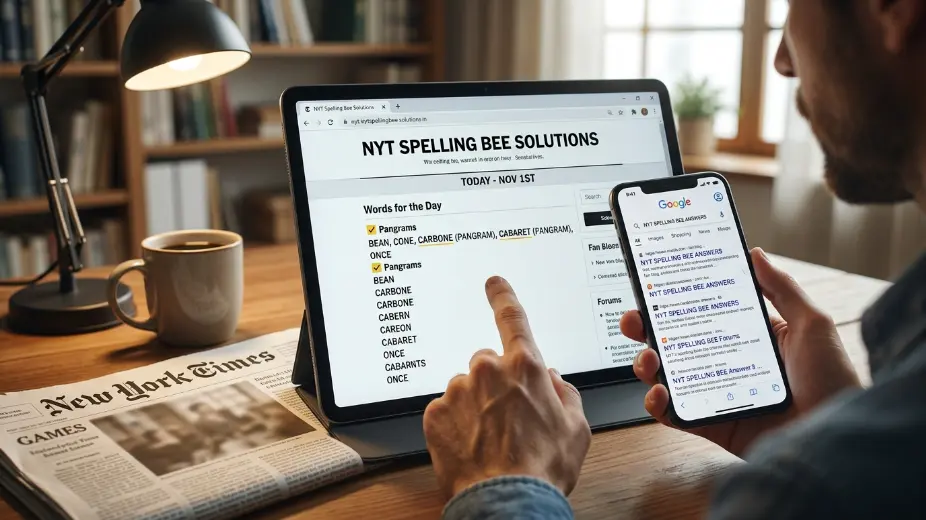
If you search for nyt spelling bee answers, you are probably stuck on a puzzle and want a little help. That is normal. The New York Times Spelling Bee is fun, but it can also be tricky. Some days the words come fast. Other days, you stare at the letters and feel like the answer is hiding from you. This guide will show you where to find answers, how to check them, and how to get better at the game without losing the fun.
The Spelling Bee is not just about knowing big words. It is about seeing patterns, trying many letter mixes, and staying calm when the answers do not come right away. That is why so many people look for help. They want to keep learning, score more points, and enjoy the game without getting frustrated. If that sounds like you, this article will help.
What Is NYT Spelling Bee?
NYT Spelling Bee is a word game from The New York Times. Every day, it gives you seven letters. One letter is in the center, and you must use that letter in every word you make. You can use the other letters as many times as you want. The words must be real English words, and they must be at least four letters long.
The game may look simple at first, but it gets harder than many people expect. You may find one or two easy words right away, but then the rest feel hidden. That is why players often look up answers or use answer lists. They want to see what they missed and learn new words for next time.
The goal is not only to get a high score. It is also to reach new ranks, find the pangram, and enjoy the challenge. A pangram is a word that uses all seven letters. When you find it, it feels like a big win.
Where Are Answers to NYT Spelling Bee?
There are a few places where people usually look for answers. Some use official help from The New York Times. Others use fan websites, puzzle blogs, or community pages. Each one works in a different way.
The first place many people check is the NYT puzzle itself. Sometimes the game gives hints, and sometimes you can see your progress clearly. But the full answer list is usually not shown right away. That is why players go online.
Many websites post daily answer lists after the puzzle is live. These pages often show all accepted words, the pangram, and sometimes a short clue or summary. Some sites also separate the answers into easy, medium, and hard words. This helps players check which words they found and which ones they missed.
Another common place is social media. Many puzzle fans share tips, hint lists, and small clues instead of full answers. This is good for people who want help but do not want the whole solution spoiled too fast. If you only need a little push, this can be better than reading the full answer list.
Some players also join online groups or forums. There, people talk about the puzzle, share guesses, and help each other. This can make the game feel more social and less stressful.
Why People Search for Spelling Bee Answers
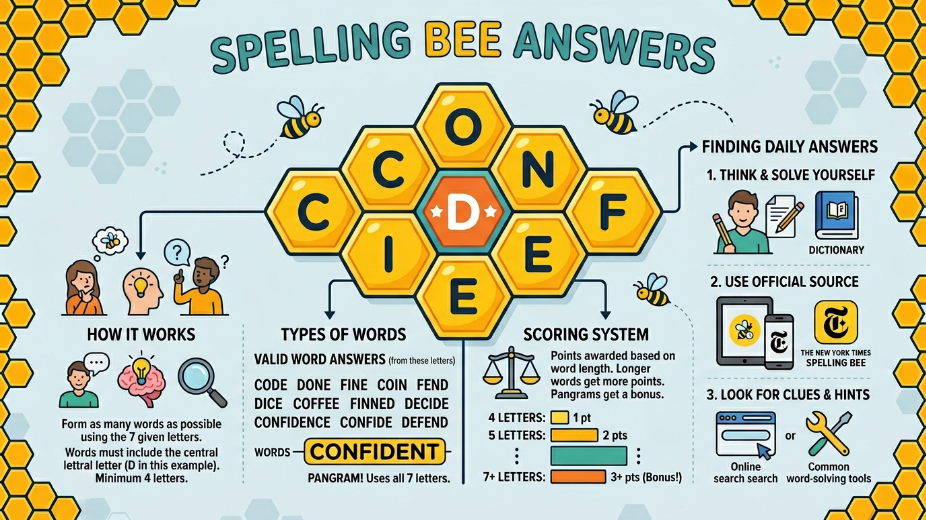
People search for answers for many reasons. One reason is frustration. Some puzzles are easy, but others feel almost impossible. You may know many English words and still miss a long list of answers. That can make you feel stuck.
Another reason is learning. Many players do not just want to finish the puzzle. They want to improve. When they see the answers, they learn new word forms, new letter patterns, and new ways to think. This helps them do better the next day.
Some people search for answers because they are close to a rank and want to cross the line. A few extra words can make a big difference. One pangram can move you forward fast.
Others search because they enjoy checking their work. They may already have a lot of words and want to see if they missed any common ones. That simple check can feel satisfying.
How to Use Answers the Smart Way
Looking at answers can help, but it is better to use them the smart way. If you only copy the answers, you do not learn much. The best way is to try the puzzle first, then check the answer list later.
Start by making your own guesses. Write down all the words you can think of. Try different endings like “-ed,” “-ing,” “-er,” and “-ly.” Try repeating letters too. Many Spelling Bee words use the same letter more than once.
After that, compare your list with the answer page. See which words you found and which ones you missed. Ask yourself why you missed them. Was it because the word was too long? Was it because you did not think of that ending? Was it because the spelling looked strange?
This method turns the answer list into a learning tool. Over time, you will start seeing patterns faster. That means you will rely less on answer pages and enjoy the puzzle more.
Where to Find Reliable Answer Pages
Not every answer page is the same. Some are clean and easy to read. Others are full of ads, pop-ups, or confusing layout. A good answer page should be simple, clear, and updated for the correct day.
A reliable page usually has the puzzle date, the full answer list, and the pangram. It should not mix up yesterday’s answers with today’s. It should also avoid fake or broken words.
When you visit a page, check if it clearly says which puzzle date it is for. That matters because Spelling Bee changes every day. A page with the wrong date will only waste your time.
Also, look for pages that explain the answers a little. Some sites show word groups, which can help you understand why certain words fit. This is useful if you want to improve instead of just finish the puzzle.
What Makes Spelling Bee So Hard?
Spelling Bee is hard because it tests both your vocabulary and your patience. You may know the center letter and the other six letters, but your brain still may not see the right combinations.
One reason is that the puzzle often uses uncommon word forms. It may include simple words, but it also hides harder ones that do not come to mind fast. Some days the answers are short and easy. Other days, the puzzle feels full of rare words.
Another reason is that your mind gets stuck. Once you start thinking in one direction, it is hard to see other options. For example, if you think a word should end one way, you may miss a different form that is also valid.
That is why a break helps. Many people solve more words after they step away for a few minutes and come back fresh. The brain works better when it is not forced.
Easy Tips to Find More Answers
If you want to solve more of the puzzle on your own, a few simple habits can help a lot.
First, begin with the center letter. Since every word must use it, it is the heart of the puzzle. Try building words around that letter.
Second, look at common endings. Words often end in “s,” “es,” “ed,” “ing,” “er,” or “ly.” These are easy ways to make new words from roots you already know.
Third, try shorter words first. Four-letter words may not feel exciting, but they add up. They can also lead your mind toward bigger words.
Fourth, rearrange the letters in your head. Say them out loud or write them in a different order. Sometimes a new arrangement opens a word you did not see before.
Fifth, do not forget repeated letters. Many players overlook words that use the same letter twice. That mistake is very common.
Sixth, read the letter set slowly. Do not rush. A calm look often works better than a fast one.
How the Pangram Changes the Game
The pangram is one of the most exciting parts of Spelling Bee. It uses every letter in the puzzle at least once. Because of that, it is usually a key word and often gives a big score boost.
Finding the pangram can feel hard at first, but it becomes easier when you look for full combinations. Think of a word that can connect all the letters. Sometimes the pangram is not a rare word at all. It may be one you already know, but your brain did not jump to it.
A smart way to find it is to search for word shapes. Look for prefixes and endings that can reach across the letter set. If you can build a word that seems to touch all seven letters, test it.
When you find the pangram, the whole puzzle feels more complete. Even if you still miss a few words, that one answer can make the game feel like a success.
What to Do When You Feel Stuck
Every Spelling Bee player gets stuck sometimes. That does not mean you are bad at the game. It only means the puzzle is doing its job.
When you hit a wall, stop looking at the same idea again and again. Your brain needs a new path. Try a short break. Walk around, drink water, or do something else for a few minutes. Then come back and try again.
You can also switch your thinking style. Instead of searching for long words, search for short ones. Instead of looking for rare words, look for plain ones. Instead of guessing from the front of a word, guess from the end.
Another good method is to use the answer list after you have tried hard on your own. Do not think of it as cheating. Think of it as training. You are teaching yourself how the puzzle works.
Should You Use Answer Lists Every Day?
That depends on your goal. If you only want to finish fast, answer lists are useful. If you want to get better, use them carefully.
A good balance is to try the puzzle first and only check answers after you have made a real effort. That way, you still challenge your mind. You also avoid becoming too dependent on the list.
Some people use answer lists only when they feel extra stuck. Others use them only to check the words they missed. Both methods are fine. The best choice is the one that keeps the game fun for you.
The point of Spelling Bee is not to stress yourself out. It is to enjoy words, improve your mind, and feel good when you discover something new.
Why Spelling Bee Fans Keep Coming Back
People keep playing because the game feels small but powerful. It takes only a few letters, but it can give a real sense of achievement. Every day is a fresh chance. Every puzzle has a new shape. Every set of letters brings a new challenge.
The game also builds confidence. At first, you may think you are missing too many words. But over time, you start seeing patterns faster. You recognize common letter groups. You notice endings more quickly. You begin to trust your memory.
There is also a fun social side. Many people compare scores with friends, family, or online groups. They talk about how hard the puzzle was and which word they missed. That shared experience makes the game more enjoyable.
And yes, many people enjoy checking the answers too. It is a simple way to see how close they got and what they learned.
Simple Way to Improve Every Day
If you play often, a little routine can help you improve.
First, spend a few minutes solving on your own. Do not rush to answers. Let your brain work.
Second, write down the words you found. This helps you see your progress.
Third, check the answer list after you finish. Look for patterns in the words you missed.
Fourth, save a few new words in your memory. If you learn one or two words each day, your vocabulary grows over time.
Fifth, play again the next day with a fresh mind. Practice is the real key.
The more you play, the more familiar the puzzle feels. What once looked impossible starts to feel normal. That is how improvement happens.
Common Mistakes Players Make
Many players make the same mistakes again and again. One common mistake is ignoring small words. Small words are easy to skip, but they often open the door to bigger ones.
Another mistake is not trying enough letter orders. People get stuck on one possible shape and never move past it. A small change can reveal a word.
Some players also forget that the center letter must be used every time. That rule is easy to miss when you are moving fast.
Others give up too soon. They think they have found all the answers when there are still many left. A second look often helps a lot.
If you avoid these mistakes, your score will likely improve.
Final Thoughts
Finding nyt spelling bee answers is normal, and it can actually help you become a better player when you use it the right way. The best approach is to try the puzzle first, think through the letter patterns, and then check answers to learn what you missed. That way, you still keep the fun of solving while also building your word skills.
Spelling Bee is loved because it is simple on the outside and clever on the inside. It teaches patience, focus, and vocabulary in a way that feels like a game instead of schoolwork. Some days you will solve a lot. Some days you will only find a few. Both are part of the game.
Also Read

Add a Comment