
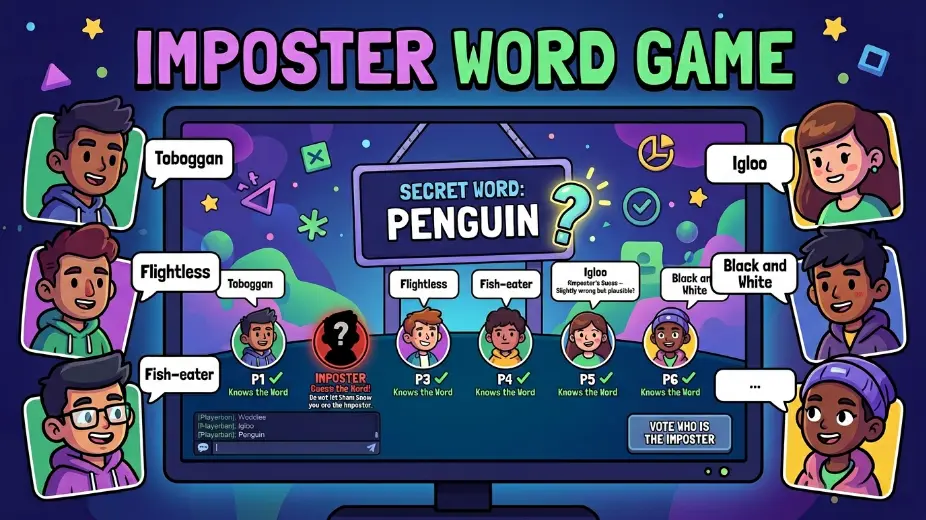
The Imposter Game is a fun word game that mixes guessing, smart thinking, and a little bit of tricking. Many people like it because it feels exciting and different from normal word games. In this game, one person may have a secret role, and other players must figure it out by using words, clues, and careful thinking. That is why so many players enjoy it. It is easy to start, but it can also become tricky very fast.
This game is good for kids, teens, and adults. It does not need hard tools or big setup. In many versions, all you need is a group of people, some words, and a little bit of attention. The fun part is that everyone has to listen closely and think before they speak. A wrong word can give away the answer. A smart clue can help win the game. That mix of fun and challenge makes the game popular.
In this guide, you will learn how to play imposter word game in a simple way. You will also learn the main rules, how to win, how to stay safe as a player, and how to get better with practice. The goal is to make everything easy to understand, even if you are new.
What Is Imposter Word Game?
Imposter Word Game is a game where players get words, clues, or roles. One player is often the imposter. The imposter does not know the same secret word as the other players. The other players try to give clues, ask questions, or talk in a smart way without making the imposter guess the answer too soon.
In some versions, players speak one by one. In other versions, they write words down. In a few versions, people use cards, apps, or online rooms. The rules may change depending on the version, but the main idea stays the same. One player tries to blend in. The others try to spot who is lying or who does not know the word.
That is why the game is called an imposter word game. It is not only about words. It is also about acting natural, listening carefully, and using your brain.
Why People Like This Game
People enjoy this game because it feels fun right from the start. You do not need to be an expert. You only need to pay attention and play with care.
There are a few reasons why people love it so much:
It is easy to learn.
It works well in groups.
It makes people laugh.
It helps players think faster.
It can be played at school, at home, or online.
It feels different every time.
The game is also exciting because nobody knows the full truth at first. That mystery makes everyone stay focused. Even shy players often enjoy it because they get a chance to talk, guess, and join the group.
Basic Idea of the Game
The basic idea is simple. Most players know the secret word or theme. One player is the imposter and does not know it. Everyone gives clues. The imposter listens, tries to act normal, and guesses the word or hides the fact that they do not know it.
The fun starts when players begin noticing small mistakes. Maybe the imposter gives a strange clue. Maybe they answer too slowly. Maybe they repeat the same kind of words over and over. At that point, other players may start suspecting them.
The imposter must stay calm. They must listen closely and make smart guesses. The other players must be careful not to reveal too much. That back-and-forth is what makes the game exciting.
What You Need to Play
You do not need much to play the game. In most cases, the list is short.
You may need:
A group of players
Word cards or a word list
A phone or app, if you are playing online
A safe space to talk and guess
A timer, if your version uses one
Some versions use pictures or topics instead of one secret word. That is okay too. The main rule is still the same. One player tries to hide. The others try to find the truth.
How to Set Up the Game
Setting up the game is easy. First, choose the players. Then decide who will be the imposter. After that, choose the secret word or topic. Make sure the imposter does not see it.
Here is a simple way to set it up:
Pick one word for the group.
Give the word to all players except the imposter.
Tell everyone the rules before the game starts.
Start the round and let players give clues or talk.
At the end, let everyone vote on who they think the imposter is.
If the group guesses right, the honest players win. If the imposter stays hidden, the imposter wins.
How to Play Step by Step
Here is the game in simple steps.
First, one word is chosen. It might be a thing, a place, a food, an animal, or a common object.
Second, all players except the imposter learn the word.
Third, players take turns giving clues. The clue should help teammates, but it should not be too obvious.
Fourth, the imposter listens carefully and tries to fit in. The imposter may give a clue that sounds close enough to the real word.
Fifth, after the clue round, players talk and guess who the imposter is.
Sixth, the group votes.
Seventh, the game ends when the imposter is caught or when the imposter survives.
That is the basic flow. Some versions add more rounds, more players, or more rules. Still, the heart of the game stays the same.
How to Be a Good Imposter
Being the imposter is one of the most fun parts of the game. It is also one of the hardest parts. You must act like you belong there, even when you do not know the secret word.
A good imposter stays calm. They do not panic. They listen to the clues from others and try to copy the style of the group. If the word is about food, for example, the imposter may give a clue that sounds like food without naming it exactly.
A good imposter also avoids being too perfect. If they sound too sure, people may become suspicious. If they sound too lost, people may also notice. The best imposter acts natural.
Another smart move is to watch the other players. Their clues can help you figure out the word. Sometimes the answer becomes clear halfway through the round. When that happens, the imposter can blend in better.
How to Spot the Imposter

Spotting the imposter is the fun part for the other players. It takes attention and patience. You should listen to each clue and look for strange behavior.
Here are some signs:
The player gives a clue that feels too random.
The player is slow to answer.
The player copies other people too much.
The player seems nervous or overacts.
The player uses a word that does not fit the topic well.
Still, you should not guess too fast. Sometimes a player is only shy or confused. One strange clue does not always mean they are the imposter. The best way is to watch the full round and compare all the answers.
Good Clue Ideas for Honest Players
If you are not the imposter, your job is to help the group without giving the secret word away too quickly. That is harder than it sounds.
A good clue is clear but not too strong. For example, if the secret word is “apple,” you may say “fruit” or “red.” That gives help without saying the word itself.
A clue should be simple. Long, confusing clues can make the game messy. A good clue also matches the topic. If the word is about an animal, do not give a clue that sounds like a place or a tool unless it truly fits.
The best honest players think before they speak. They want to help their team, but they also want to keep the game fair.
Common Mistakes Beginners Make
Many beginners make the same mistakes when they start playing.
One common mistake is talking too much. If you give too much detail, you may make the word too easy to guess.
Another mistake is staying silent for too long. That can make others think you are hiding something.
A third mistake is using clues that are not connected to the topic. That confuses everyone.
Some players also guess too early. They hear one clue and jump to a conclusion before the round is finished.
Another big mistake is not listening. This game is not only about talking. It is also about paying attention.
If you avoid these mistakes, you will get better fast.
Tips for Winning as the Imposter
If you want to win as the imposter, you need to be smart, calm, and quick.
First, listen closely before you speak. The more you hear, the better your guess will be.
Second, keep your clues short and natural. Do not try to sound like a dictionary. Real people speak simply.
Third, match the mood of the group. If others are serious, stay serious. If others are relaxed, stay relaxed.
Fourth, do not copy one person too much. That can make you look fake.
Fifth, stay confident even if you are unsure. A nervous face can give you away.
Sixth, use questions if the version of the game allows them. Asking smart questions can help you learn the word without exposing yourself.
Tips for Winning as a Regular Player
If you are not the imposter, your goal is to find them before the round ends. That means you need to watch closely.
Listen to every clue.
Compare each clue with the others.
Notice who sounds confused.
Look for players who repeat themselves.
See who gives clues that are too wide or too narrow.
Trust the full pattern, not just one answer.
A strong player does not rush. They think about the whole round. They ask, “Does this clue really fit?” That question can help a lot.
How to Play With Friends
Playing with friends makes the game even more fun. Friends already know each other, so it is easier to notice small changes in voice, timing, and behavior. That can make the game more exciting.
You can also add your own rules when you play with friends. Some groups use timer limits. Some use point scores. Some use funny themes like animals, food, school items, or movie names.
The important thing is to keep the game fair and fun. Everyone should understand the rules before the first round starts.
How to Play Online
Many people now play imposter word games online. This can be done through apps, chat rooms, or game rooms. The setup may be a little different, but the idea stays the same.
Online games often use private rooms. Players join the room, get their role, and start the round. Some versions use voice chat, while others use text chat.
When playing online, be sure your connection is stable. Also check the rules of the app you are using. Every app may work a little differently. Some may focus more on words, while others focus more on hiding the imposter.
Best Ways to Practice
The best way to get better is to play often. The more you play, the faster you will notice patterns. You will also learn how people act when they are unsure or trying to hide.
You can practice by doing small rounds with family or friends. Start with easy words. Later, use harder topics. This helps you build confidence.
You can also practice clue-making. Pick a word and try to give a clue that is helpful but not too obvious. This simple exercise makes you better at the game.
Why This Game Is Good for the Brain
This game is not just fun. It also helps the brain work in better ways. Players must listen, think, guess, and speak with care. That is a lot of brain work in one game.
It can help with memory because you must remember clues.
It can help with focus because you must pay attention.
It can help with speaking because you must choose words carefully.
It can help with social skills because you work with other players.
That is one reason teachers, families, and groups like games like this. They are fun, but they also teach useful skills.
Fun Themes You Can Try
If your group wants more fun, try different themes. Themes can make the game fresh and exciting.
Some easy themes are:
Animals
Fruits
School items
Sports
Colors
Countries
Jobs
Movies
Themed rounds make it easier to play and easier to understand. They can also make the imposter’s job harder, which adds more fun.
How to Keep the Game Fair
Fair play matters. Everyone should get a chance to enjoy the game. Do not let one player control everything. Do not change the rules in the middle of a round unless the group agrees.
Also, do not make clues that are too easy on purpose. The challenge is part of the fun. At the same time, do not make the game so hard that nobody can enjoy it.
A fair game is the best kind of game. It gives everyone a reason to stay engaged.
A Simple Example Round
Here is an easy example.
Let us say the secret word is “banana.”
The honest players may give clues like “fruit,” “yellow,” or “soft.”
The imposter does not know the word at first. They may hear the clues and start to guess. They might say “food” or “sweet fruit” to stay safe.
As the round continues, players listen carefully. If someone says a clue that does not fit, others may suspect them. By the end, the group votes on who they think is the imposter.
This is how the game feels in real life. It is simple, but it creates a lot of tension and fun.
Final Thoughts
The imposter word game is easy to learn and fun to play. It mixes words, clues, and smart thinking in a way that keeps everyone busy. You do not need much to start. A group of people, a secret word, and a little focus are enough.
The best part is that every round feels different. Sometimes the imposter wins. Sometimes the group catches them fast. Sometimes everyone laughs because the clues are so funny. That is what makes the game special.
If you are new, start with simple words and short rounds. Learn how to give good clues. Learn how to spot strange behavior. Play a few times, and the game will start to feel easy and exciting.
The more you play, the better you get. You will speak more carefully, listen more closely, and guess more wisely. That is why many people keep coming back to it again and again.
Also Read-The Deadline Crunch: Strategies for Balancing Technical Logic and Intensive Coursework

Add a Comment