
A roof does its work quietly. It sheds rain, holds back wind, carries the weight of debris, and takes the full force of the sun without asking for attention. Because it performs so steadily, most people stop thinking about it until something forces them to.
For homeowners in Salem, where wet seasons are long and gray skies are ordinary, that habit of looking away can be expensive. Roofs rarely fail all at once. They wear slowly, in ways that are easy to miss from the driveway, and the earlier those changes are spotted, the smaller the eventual repair tends to be.
How Roof Problems Begin and Spread
Most roof problems begin long before anyone notices them, and by the time a stain appears on a ceiling, water has usually been moving through the structure for weeks or months. The trouble is that a roof is almost impossible to judge honestly from ground level, so the moment a homeowner finally needs a roofing contractor, the decision is made under pressure, with buckets on the floor and no time to compare options.
What helps is knowing, ahead of any emergency, which trusted local roofing specialist inspects, repairs, and replaces roofs well. Homeowners can spare themselves a great deal of stress by hiring a local Salem roofing contractor before a small fault turns into a leak, so that the roof is assessed on a calm day rather than during a downpour.
The Everyday Forces That Wear a Roof Down
Wear is not a single event. It is the result of many ordinary forces acting on the same surfaces year after year. Sunlight dries out the oils that keep shingles flexible, which is why older roofs often look faded and brittle compared with newer ones. Rain finds every small opening and works its way deeper. Wind lifts edges and loosens fasteners a little at a time. Moss and algae hold moisture against the surface long after the rain stops, and freezing nights expand whatever water has collected in seams and cracks.
Temperature swings matter more than people expect. Materials expand when they warm and contract when they cool, and that constant movement slowly loosens nails, widens gaps, and separates sealed joints. None of this is dramatic on any given day. Over a decade, it adds up to a roof that no longer performs the way it did when it was new.
Signs of Damage You Can See From the Ground
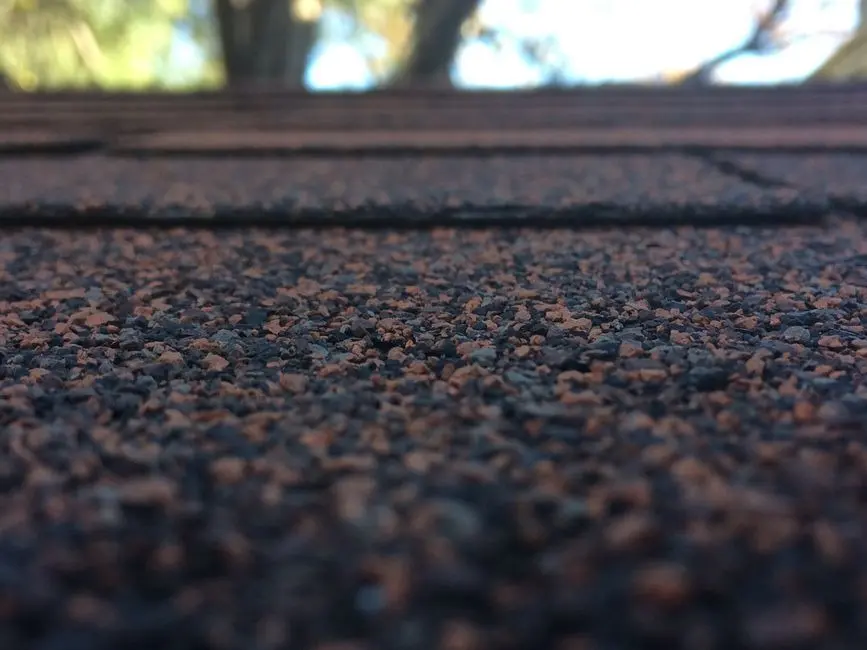
A careful look from the yard, ideally with a pair of binoculars, reveals more than most people assume. Shingles that curl at the corners, buckle in the middle, or sit unevenly against their neighbors are a clear sign that the material has aged past its best years. Bare patches where the protective granules have worn away leave the surface underneath exposed, and those granules often show up in the gutters as a coarse, sandy grit.
Other clues are structural. A roofline that dips or waves instead of running straight can point to weakened decking or trapped moisture below. Dark streaks and green growth suggest moisture is lingering where it should be draining. Around chimneys, vents, and skylights, the metal flashing that seals those joints may lift, rust, or pull away, and those transitions are where leaks most often start.
Storms and the Damage They Leave Behind
Heavy weather causes two kinds of harm. The first is obvious: missing shingles, branches on the roof, dented vents, bent gutters. The second is hidden, and it is the kind that costs people the most. Strong wind can break the seal between shingle layers without moving them out of place, leaving a roof that looks untouched but is no longer watertight. Hail can bruise the surface in ways that are invisible from below yet shorten the life of the material considerably.
After any significant storm, a walk around the property is worth the time. Photographs of anything unusual, taken promptly and dated, are useful later if an insurance claim becomes necessary. Waiting months to report damage makes it far harder to connect that damage to the weather event that caused it.
Why Gutters Affect the Life of a Roof
Gutters are easy to overlook and closely tied to how long a roof lasts. When they clog with leaves, needles, and grit, water backs up along the edge of the roof instead of draining away. That standing water soaks into the underlying boards, rots the fascia, and works its way beneath the lowest row of shingles.
The damage does not stop at the roofline. Overflowing gutters send water down the walls and into the soil at the base of the house, which over time affects siding, window frames, and the foundation itself.
Simple Habits That Extend a Roof’s Life
Roofs reward routine attention. Check the surface visually twice a year, in spring and in autumn, and again after any severe weather. Trim branches that hang over or brush against the roof, since they drop debris, hold moisture, and scrape the surface in high wind. Keep the attic ventilated so heat and humidity can escape rather than sitting against the underside of the boards.
Deal with small problems while they are still small. A loose shingle, a cracked seal, or a slow drip is inexpensive to fix in the week it appears, and considerably less so once water has reached the framing, the insulation, and the rooms below.
Planning Ahead Instead of Reacting
The most valuable thing a homeowner can do is stop treating the roof as something that only matters when it fails. Knowing roughly how old it is, what it is made of, and what condition it was in at the last inspection turns a vague worry into a manageable plan. It also makes budgeting realistic, because a roof nearing the end of its life is a known expense rather than a sudden emergency.
Wear is unavoidable. Damage, for the most part, is not. The difference between the two usually comes down to how early it was noticed and how quickly someone acted on it.
Also Read

Add a Comment