
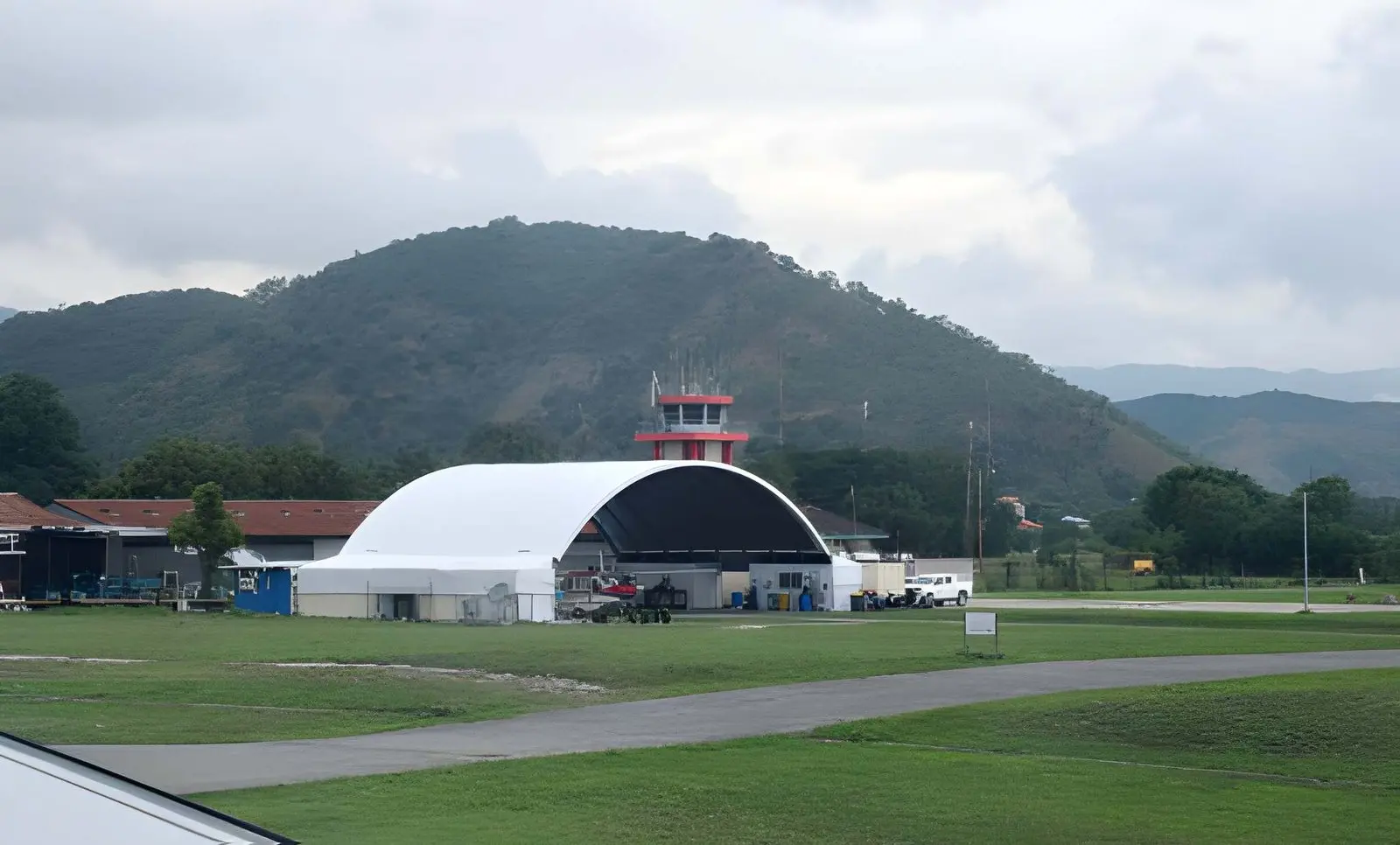
Airports around the world are under mounting pressure. Passenger numbers are climbing back toward pre-pandemic levels and beyond, cargo volumes continue to grow with e-commerce, and general aviation traffic is expanding in tandem with regional economic development. For airport operators, logistics companies, and the local governments that oversee them, this growth creates an urgent and familiar problem: not enough covered space to safely store, maintain, or process aircraft, equipment, and materials.
Traditional hangar construction is slow, capital-intensive, and often out of step with how quickly operational needs change. This is why an increasing number of decision-makers in aviation, logistics, and even adjacent sectors like sports infrastructure and construction are turning to temporary and semi-permanent fabric-covered structures as a faster, more flexible alternative.
Why Airport Capacity Is Becoming a Bottleneck
Several converging trends are driving demand for additional covered space at airports and aviation facilities:
- Fleet growth and diversification. Airlines, charter operators, and cargo carriers are adding aircraft faster than permanent infrastructure can be built to house them.
- Maintenance, repair, and overhaul (MRO) expansion. Regulatory requirements and aging fleets mean more aircraft need indoor maintenance bays, and existing hangars are often booked months in advance.
- Seasonal and event-driven surges. Airshows, military exercises, disaster response operations, and seasonal charter demand all create short-term spikes in the need for covered aircraft storage.
- Supply chain disruption. Just as warehouses and distribution centers have had to scale quickly in response to shifting logistics networks, airports face similar pressure to stand up storage and staging areas on short notice.
For a CEO or COO overseeing an airport authority, an FBO (fixed-base operator), or a logistics operation tied to air freight, the calculus is simple: capacity constraints translate directly into lost revenue, delayed maintenance cycles, and reputational risk with customers and regulators.
The Case for Temporary Hangar Structures
Fabric-covered, engineered hangar structures offer a compelling middle ground between renting expensive third-party space and committing to a multi-year permanent construction project. The advantages typically cited by operators include:
1. Speed of deployment. Where a conventional steel hangar can take a year or more from design to completion, a fabric structure engineered for aviation use can often be installed in a matter of weeks, allowing operations to scale in step with demand rather than years behind it.
2. Capital efficiency. Because these structures use lighter-weight, modular components, the upfront capital outlay is significantly lower than permanent construction, freeing up budget for fleet, staffing, or other operational priorities.
3. Relocatability. Airport operations evolve. A structure erected to support a temporary MRO contract, a seasonal surge, or a construction-phase gap can be disassembled and relocated to another site once its purpose is served, protecting the initial investment.
4. Engineering suitable for aviation-scale spans. Modern fabric hangar systems are far removed from simple tents. They are engineered to clear-span widths and heights capable of housing narrow-body and even some wide-body aircraft, with wind and snow load ratings suited to the airfield environment.
5. Regulatory and safety compliance. Reputable manufacturers design these structures to meet the same fire, wind, and structural codes expected of permanent aviation buildings, which matters greatly to airport authorities and insurers.
Beyond Aviation: A Model Other Sectors Are Adopting
Interestingly, the same structural logic driving hangar adoption at airports is being applied by sports infrastructure managers and local governments facing their own space-and-time constraints. A municipality building a temporary field house ahead of a permanent stadium, or a sports federation needing covered training space during a construction phase, faces an almost identical decision tree: speed, cost, and flexibility versus the certainty of a fixed asset. The engineering principles behind large-span fabric structures translate directly across these use cases, which is why the same manufacturers who serve airports often serve construction, logistics, and sports clients as well.
What to Look for When Evaluating a Temporary Hangar Provider
For decision-makers evaluating this option, a few criteria separate a reliable long-term solution from a costly mistake:
- Structural engineering credentials. Ask for site-specific wind and snow load calculations, not generic specifications.
- Track record with aviation clients. Experience with airside operations, aircraft clearances, and airport authority approval processes matters enormously.
- Foundation and anchoring flexibility. The best systems can be adapted to different ground conditions, from concrete aprons to compacted gravel.
- Lifecycle and reuse potential. A structure that can be redeployed multiple times over its service life offers a materially better return on investment than a single-use installation.
One example of engineering applied specifically to aviation use cases can be seen in the work being done by MSG Aviation, which illustrates how far fabric structure design has advanced beyond simple storage tents toward genuine operational infrastructure.
Making the Business Case Internally
For CEOs, COOs, and infrastructure managers, the pitch to stakeholders and boards typically comes down to three numbers: time to operational readiness, capital cost per square foot of usable space, and the residual value of the asset if operations change. Temporary hangar structures generally outperform permanent construction on the first two and, when relocatability is factored in, can be competitive on the third as well.
As airport operations, cargo throughput, and adjacent infrastructure needs continue to grow faster than permanent construction timelines can accommodate, temporary and semi-permanent fabric hangar structures are likely to become a standard part of the toolkit for any organization that needs to scale covered space quickly, safely, and cost-effectively.
Also READ-Precision Machining Technology: CNC Machining Advancements

Add a Comment