
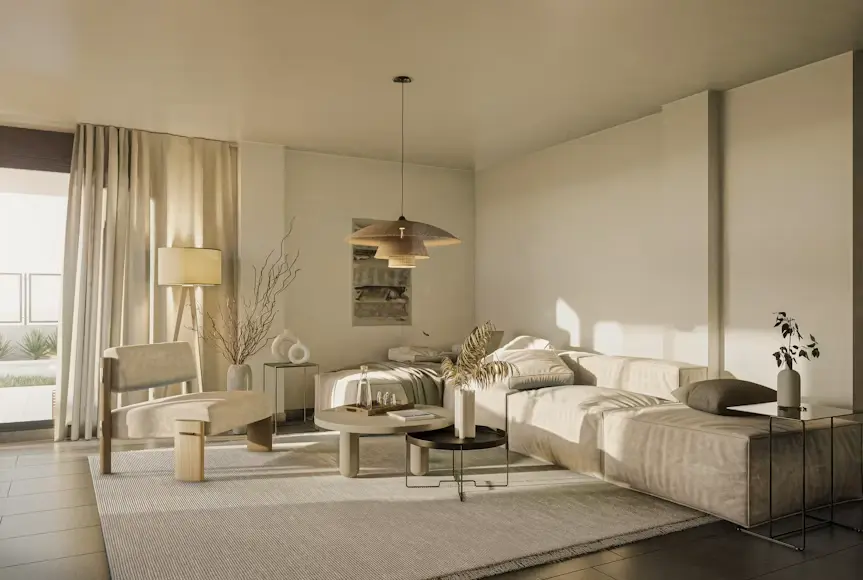
Desiring a home that is warm, cozy and bright without resembling an airport terminal?
Lighting can make or break a room. Poor lighting can kill even a million-dollar remodel.
The tricky part?
There is a delicate balance between a room that is beautifully lit and one that is harsh, glaring, and fatiguing to be in. The majority make this mistake by:
- Use too many bright bulbs
- Stick to a single light source
- Pick the wrong colour temperatures
Here’s how to do it right…
In This Guide:
- Why Good Lighting Matters
- The Layered Lighting Method
- Choosing The Right LED Bulb Usage For Each Room
- Smart Controls & Dimmers
- Common Lighting Mistakes To Avoid
Why Good Lighting Matters
Lighting is more than just functionality. It creates ambiance, influences spatial perception, and can even impact sleep quality.
And here’s the kicker…
Lighting drains your cash every month as well. According to the U.S. Department of Energy, lighting makes up about 15% of home electricity use, so doing lighting wrong can cost you big time too.
The good news? LED bulbs have flipped the script. LEDs are more efficient, run cooler and have a much longer lifespan than their incandescent ancestors.
It doesn’t give you license to hang 12 LEDs from your living room ceiling either. Some of the bright cities in America have demonstrated what hyper-bright lighting looks like at scale – glare, light pollution and areas that look more like operating theatres than residence halls.
Your home should be the opposite of that. Cozy. Calm. Easy on the eyes.
And it can be — if you follow a few simple rules.
The Big Mistake Most People Make
Most homeowners pick lighting the same way:
- Walk into a hardware store
- Grab the brightest bulb on the shelf
- Screw it into the ceiling fixture
- Call it done
Here’s the problem:
Spotlighting from ceiling lights directly above cause bad shadows, dark corners and no ambiance. The entire room can look dull as a result.
Imagine this… You won’t see one huge spotlight shining down on a magazine-worthy photo. There are many smaller lights hitting it from all sorts of angles. That’s how you want lighting to look in your living space too.
That brings us to the secret…
The Layered Lighting Method
One of the basic rules professional interior designers follow is known as layered lighting. Essentially it means you should use 3x layers of light in every room:
- Ambient lighting: The general overhead light — the base layer
- Task lighting: Focused light for reading, cooking, or working
- Accent lighting: Soft light to highlight artwork, plants, or shelves
Layered lighting is the difference between a room that looks “okay” and a room that looks high-end. Amazing huh?
To layer properly:
- Start with one main ceiling fixture or recessed downlights
- Add 2-3 lamps at different heights (floor lamps, table lamps)
- Finish with accent lights — wall sconces, picture lights, LED strips
That’s it. Three layers, every room.
(There’s that “keep it simple” approach again.)
Choosing The Right LED Bulb Usage For Each Room
Now to the part most people get wrong — picking the actual bulbs.
You need to care about LED bulb usage. Because not all rooms in your house require the same type of lighting. Here are the two things you want to check on the packaging:
- Lumens — how bright the bulb is
- Kelvins — the colour of the light (warm vs cool)
Here’s a quick cheat sheet for the main rooms in your home:
- Living room: 1,500-3,000 lumens total, 2,700K (warm, cozy)
- Kitchen: 5,000-10,000 lumens total, 3,000-4,000K (clean, bright)
- Bedroom: 1,500-4,000 lumens total, 2,700K (warm, relaxing)
- Bathroom: 4,000-8,000 lumens total, 3,000-5,000K (crisp)
- Home office: 3,000-6,000 lumens total, 4,000-5,000K (focused)
The mistake?
Everyone runs out and buys 5,000K daylight bulbs and replaces them everywhere. Your living room now looks like a hospital waiting room.
Bonus: LED bulbs have taken over the world. The U.S. Energy Information Administration reported that 90% of households use LEDs for indoor lighting — which means there’s an infinite number of options on the store shelf.
Smart Controls & Dimmers
Want to instantly upgrade every room in your house?
Add dimmers.
Dimmers are the single best lighting investment you can make. They let you:
- Lower brightness for evening relaxation
- Crank it up when it’s time to clean or work
- Change the mood without changing the bulb
- Save even more on the energy bill
And here’s a tip most people miss…
Use smart switches with dimmable LED bulbs. Smart switches allow you to control all of your lighting from one app or voice assistant. Program scenes for movie night, dinner, morning routines – you name it!
It sounds fancy, but the setup takes less than an afternoon.
Common Lighting Mistakes To Avoid
Of course, even if you follow this LED bulb usage strategy there are some old standpat mistakes to avoid. Steer clear of these and you will beat 90% of homeowners.
Going Too Bright
Just because you can light something more, doesn’t mean you should. Too much light creates glare, bleeds color and makes a room feel harsh and unwelcoming.
If you walk into your living room and instantly squint… it’s too bright.
Mixing Colour Temperatures
Installing a 2,700K warm bulb next to a 5000K daylight bulb looks terrible. It fights with each other and your brain sees it immediately.
Stick to one colour temperature per room. Always.
Forgetting About Natural Light
Consider windows before you do anything else. A brightly lit room will require a completely different lighting approach than a windowless basement room.
Plan around what’s already there.
Skipping The Dimmer
One that keeps popping up.. Turn most of your overhead lights onto dimmers. Very inexpensive and easy.. it changes the look and feel of a space dramatically.
Bringing It All Together
Lighting design doesn’t have to be hard. Layering, proper use of LED bulbs in each room and a dimmer on almost every fixture will help.
To quickly recap:
- Use 3x layers of light in every room (ambient, task, accent)
- Pick the right lumens and Kelvins for each space
- Stick to one colour temperature per room
- Add dimmers to control the mood
- Don’t over-light — more isn’t better
Best of all? LEDs make this simple and cost-effective. Per the IEA, lighting accounts for around 8% of global electricity demand, so little improvements around the house can lead to large impact.
So don’t go out and purchase a carton of bulbs tomorrow. Take a stroll through each room, visualize what you want it to feel like and create a lighting scheme based on that.
Your eyes (and your power bill) will thank you.
Also READ

Add a Comment