Direct-to-film (DTF) printing continues to attract apparel businesses, custom printing shops, and entrepreneurs looking for a flexible way to produce personalized garments. However, one of the first questions buyers usually ask is simple: how much does a DTF printer cost in 2026?
The answer depends on printer size, production capacity, print quality, ink configuration, automation, and the overall workflow. Instead of focusing only on the purchase price, businesses should consider what they actually need to produce and how the equipment will affect long-term operating costs.
How Much Does a DTF Printer Cost in 2026?
DTF printer prices can vary significantly. Entry-level desktop models are generally designed for startups, home-based businesses, and users with relatively modest production volumes. Larger commercial systems cost considerably more because they are built for higher throughput, wider printing formats, and longer production cycles.
A practical way to compare machines is to divide them into several categories:
- Entry-level DTF printers: Suitable for beginners and small-scale customization businesses.
- A3/A3+ DTF printers: Designed for businesses producing regular apparel orders while maintaining a relatively compact footprint.
- 24-inch DTF printers: Better suited to businesses that need wider printing capabilities and higher production capacity.
- Industrial DTF systems: Designed for established print shops and commercial operations with demanding production schedules.
Prices within each category can also differ depending on printheads, ink systems, software, curing equipment, and included accessories.
What Affects DTF Printer Price?
The printer itself is only one part of the investment. Several technical factors can influence the final price.
Printing Width
Printing width is one of the most obvious factors. A compact printer may be enough for standard T-shirt designs, while businesses producing larger graphics or handling more orders may benefit from a wider-format machine.
For example, a 24 inch DTF printer can provide substantially more printing flexibility than a small desktop model. It may be a better fit for businesses that have moved beyond occasional orders and need greater production capacity.
Printhead Configuration
Printheads have a major influence on both print quality and production speed. Different machines use different printhead technologies and configurations, so buyers should compare resolution, speed, replacement costs, and expected service life rather than judging a printer solely by its advertised output.
Ink System
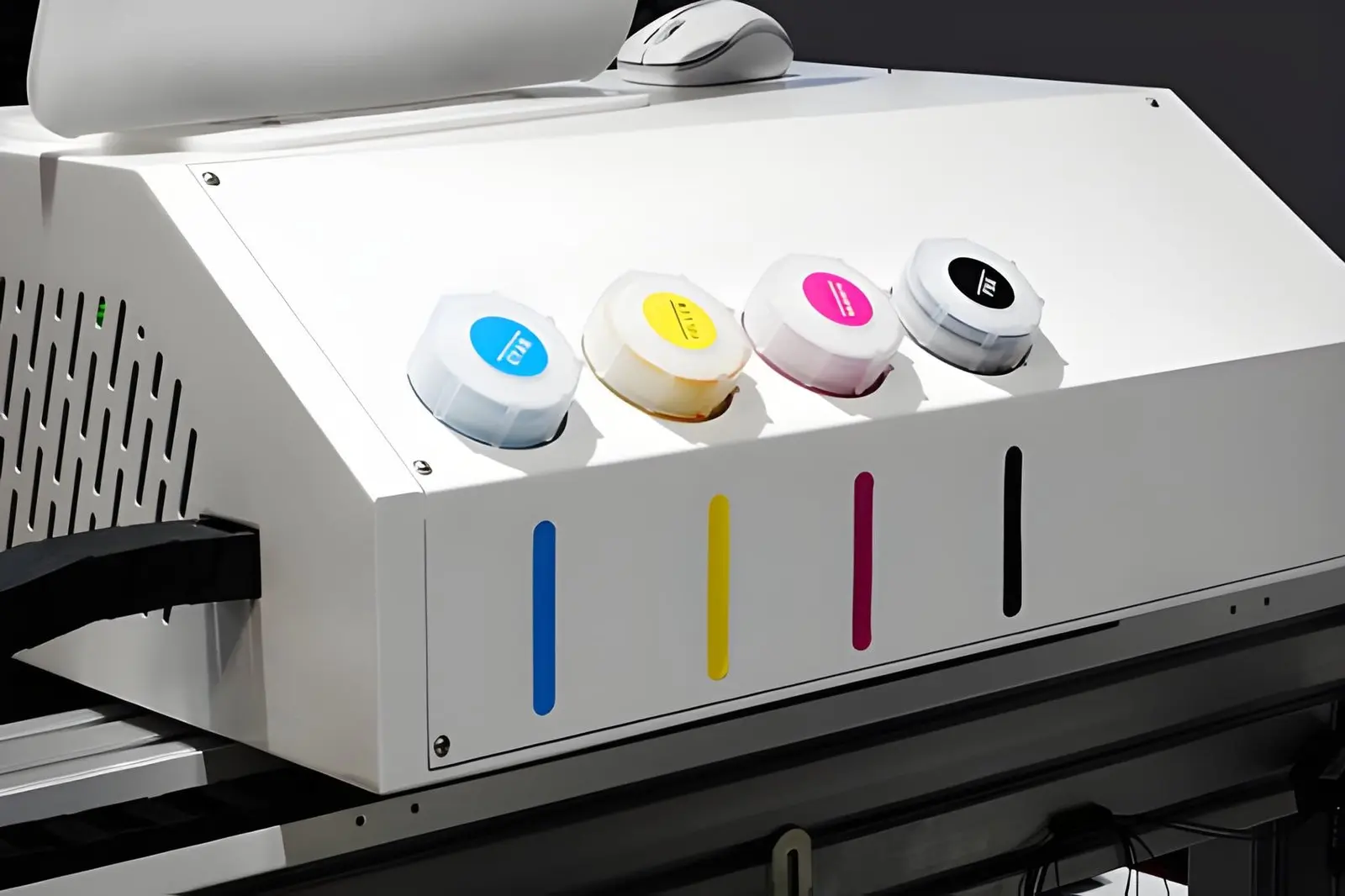
DTF printing relies on CMYK inks plus white ink for many applications. White-ink management is particularly important because inadequate circulation or poor maintenance can result in clogging and inconsistent print quality.
When comparing prices, consider the cost of ink and other consumables over time. A cheaper machine may not necessarily have the lowest total cost of ownership.
Included Equipment
Some DTF systems are sold as printers only, while others may be offered as part of a more complete production solution. Film powder, powder shakers, curing equipment, RIP software, and other accessories can add substantially to the overall investment.
For this reason, buyers should compare complete setups instead of comparing printer prices in isolation.
Should a Small Business Buy a More Expensive Printer?
Not necessarily. The best DTF printer is the one that matches the business’s actual workload.
A startup producing a few dozen garments per week may not benefit from purchasing a large industrial system. A compact printer can reduce the initial investment and make it easier to learn the DTF workflow.
On the other hand, a growing business receiving consistent bulk orders may quickly outgrow an entry-level machine. In this situation, investing in a higher-capacity printer can make more sense because increased productivity may offset the higher purchase price.
Calculate the Total Cost of Ownership
A smart purchasing decision should include more than the initial equipment price. Businesses should estimate:
- DTF ink consumption
- Transfer film costs
- Hot-melt powder consumption
- Printhead replacement
- Routine maintenance
- Electricity
- Software and RIP costs
- Labor
- Curing and powder-processing equipment
These expenses determine the actual cost of producing each transfer.
For example, if a printer has a relatively low purchase price but requires frequent maintenance or consumes expensive consumables, its long-term cost may be higher than expected.
Consider Manufacturer Support
Technical support is another factor that can justify differences in DTF printer prices. For a small business, downtime can mean missed orders and dissatisfied customers.
Before purchasing, check whether the manufacturer provides installation guidance, operating instructions, troubleshooting resources, spare parts, and after-sales support. It is also useful to research the manufacturer’s reputation and product range. Businesses researching equipment can search for DTF LINKO to learn more about its DTF printing solutions and available models.
Price Should Not Be the Only Decision
The cheapest DTF printer is not automatically the best value. Similarly, the most expensive machine may provide capabilities that a small business never uses.
The right approach is to match printer specifications with production volume, available workspace, product types, expected growth, and budget. A business focused on personalized T-shirts may prioritize affordability and ease of use, while a commercial print shop may prioritize speed, wider printing, and continuous production.
Final Thoughts
DTF printer prices in 2026 cover a broad range because the market serves businesses with very different requirements. Before making a purchase, consider printing width, printhead technology, ink costs, maintenance, included equipment, production volume, and manufacturer support.
For beginners, a compact system may provide an economical entry point. For expanding print businesses, a wider-format or commercial machine can offer the capacity needed to handle larger orders.
Ultimately, the best investment is not simply the printer with the lowest price tag. It is the machine that delivers the right combination of productivity, quality, reliability, and operating costs for your specific business model.
Also Read-Tech Leader Onboarding Checklist for High-Growth Companies

Add a Comment