
Many people are first drawn to jewelry engraving by the tools themselves.
In recent years, more and more people have been sharing photos of their workbenches and engraving processes on social media. After seeing close-up shots of clean metal edges and intricate patterns that look as if they’re naturally part of the ring, you’ll likely find yourself wondering what kind of equipment they’re using. Chances are, you’ll come across the term “pneumatic engraver.” Anyone working in jewelry, micro-engraving, or gem setting will eventually come across it.
However, there’s a problem: when beginners first learn about pneumatic engravers, they’re easily overwhelmed by all the technical specifications, models, air pressure settings, and frequencies. Some buy one on impulse only to find they have no idea how to use it. Others see others using it smoothly and assume that switching to the same equipment will instantly improve their craftsmanship, only to realize later that it’s not that simple.
So before you officially dive into pneumatic engraving, it’s best to think through these questions in advance. There are some pitfalls—it’s better to avoid them if possible.
First question: Is a pneumatic engraver really suitable for beginners?
Many people ask this.
Many assume that professional tools aren’t suitable for those just starting out. In reality, pneumatic engravers aren’t that difficult to get the hang of; the real challenge lies in the engraving itself, not the tool.
Those new to jewelry engraving often assume the equipment will solve all their problems, only to discover once they start that a steady hand matters far more than the machine. This is especially true when engraving fine lines—your breathing, wrist position, and posture all affect the lines. Sometimes you’re in the zone one night and the lines flow perfectly, but the next day, using the same tools, it just doesn’t feel quite right.
The advantage of a pneumatic engraving machine is that it helps you develop that sense of control more easily; it’s much steadier than some standard power tools with noticeable vibrations. Many first-time users remark, “It’s lighter than I expected.” The sensation is somewhat like holding a pen—it glides smoothly along the surface rather than forcing its way through the metal.
But beginners shouldn’t get the wrong idea: it won’t turn you into an expert overnight; it simply makes it easier to grasp the rhythm of engraving.
Second question: Are pneumatic engraving machines inherently superior to electric ones?
This is a question that’s often misunderstood.
A lot of online content portrays pneumatic engravers as the ultimate goal in the industry, but it’s not that black and white.
Many established workshops still keep electric equipment on hand. Different tools are suited for different tasks. For rough shaping, quick sanding, and electric grinding, electric tools are just as efficient. Pneumatic tools are better suited for precise control—like micro-carving, texturing, layering patterns, inlay edges, and finishing curved surfaces—and they’re much more comfortable to use for these tasks.
If you only do basic work occasionally, there’s no need to go all out on high-end specs right away. The biggest mistake beginners make is assuming that the more expensive the equipment, the better the results—only to end up with a cluttered workbench and little actual practice time. In the jewelry industry, truly skilled artisans don’t necessarily have a lot of tools; what they do have, they use with exceptional precision.
Third question: What else do you need to prepare before buying a pneumatic engraver?
Many beginners overlook this point.
They assume that buying the engraver is all there is to it, only to discover upon delivery that they still need an air compressor. Pneumatic engravers are driven by air pressure, and the air compressor is an integral part of the system. Moreover, the stability of the air compressor directly affects the engraving experience. Some cheap air compressors have fluctuating pressure; the force can suddenly waver mid-engraving, and when working on fine lines, the tool starts shaking back and forth just as you’re getting into the groove—which is quite frustrating.
Then there’s the workspace—this is more important than many people realize. Jewelry engraving is very sensitive to your environment; lighting height, armrest height, chair position, and tool placement all affect your ability to work for long periods. Sometimes you think your hands are shaky, but it’s actually just because you’re sitting uncomfortably. I’ve seen people cram their pneumatic system under the table to save space, only to have air hoses constantly tripping over their feet—they’re annoyed within half an hour. Once they reorganized their workspace, their workflow improved immediately.
At the end of the day, jewelry making is all about the details.
Question 4: Why do some people still produce work that lacks finesse even after switching to an air-powered engraving machine?
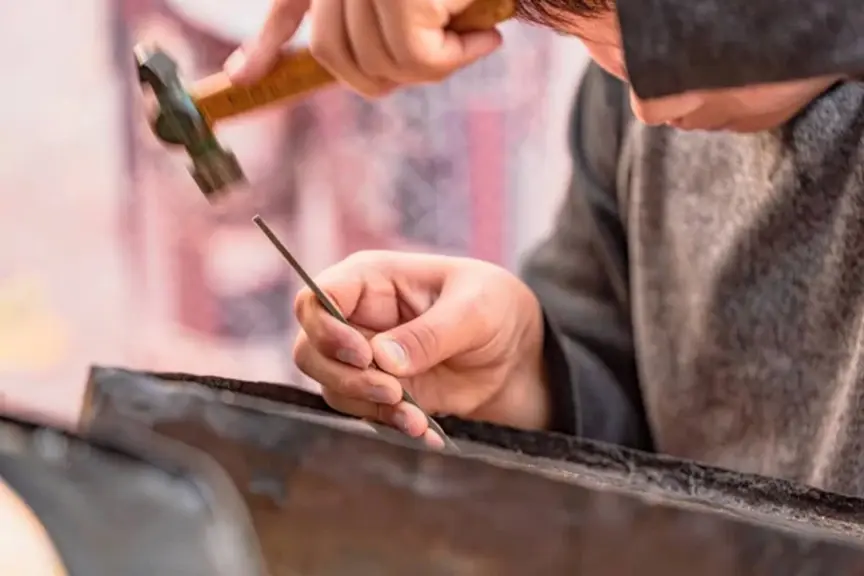
Tools aren’t magic. That’s a fact.
Many people, as soon as they switch to an air-powered engraving machine, think, “Shouldn’t I be able to create intricate textures right away?” But when they actually start engraving, they run into trouble: crooked lines, uneven edges, and garish metal reflections—and then they blame the equipment.
In reality, many of these issues stem from a lack of technical skill. There’s something in jewelry engraving that’s hard to put into words: a sense of rhythm. Watch a skilled artisan at work—their movements aren’t fast, they’re even a bit slow, but they’re incredibly steady. They know exactly when to push forward, when to stop, and when to turn. This isn’t something you can learn by glancing at a tutorial; it takes long-term practice. Sometimes, after practicing a simple pattern ten times, it suddenly clicks.
An air-powered engraving machine acts more like a magnifying glass—it amplifies your existing level of control. Those with steady hands will find it gets smoother the more they use it, while those with shaky hands will see their flaws become even more apparent.
The fifth question: Is an air-powered engraving machine worth the long-term investment?
If you’re just dabbling in it as a hobby from time to time, probably not.
But if you’re serious about a long-term career in jewelry—especially if you’re heading toward high-end custom work or micro-engraving—then you’ll likely have to use an air-powered engraving machine sooner or later.
The industry trend is clear: today’s consumers love to see the details. In the age of short videos, people zoom in to capture jewelry, textures, and reflections, driving the entire industry toward greater precision. Work that looked acceptable from a distance in the past now reveals its flaws when magnified. Under these high-detail demands, the advantages of a pneumatic engraving machine become increasingly evident.
After working for long hours, you’ll realize that comfort matters a great deal. Many people underestimate how fatigue affects their work. Jewelry engraving is mentally draining; working for just a few hours can quickly sap your energy. A stable and responsive tool can help delay the onset of that fatigue.
This is why many professional jewelers eventually upgrade their equipment—not to show off, but because they can physically feel the difference.
The biggest pitfall for beginners isn’t actually the equipment itself
This industry is prone to anxiety.
Seeing others’ exquisite work, they rush out to buy equipment. Their workbenches get more and more expensive, yet their own work doesn’t improve much.
Only later do they realize that what’s missing isn’t the machine, but the time spent practicing—and patience. Tools like pneumatic engravers take some getting used to; at first, they might not feel as comfortable as your old tools. As you gradually get used to them, one day you’ll look back at your old work and suddenly wonder how you ever managed to carve like that.
You might not notice your progress at the time, but time will gradually leave its mark.
For many people, the real reason they stick with it isn’t about making money
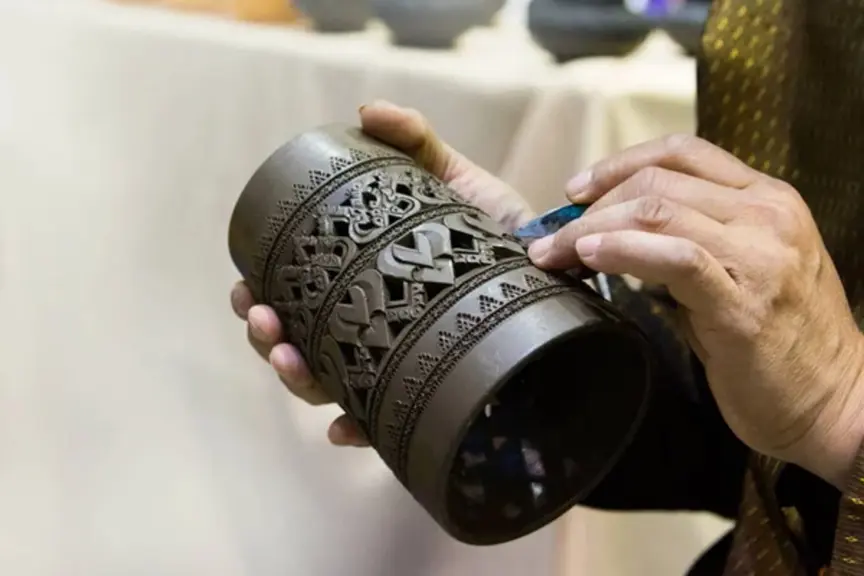
Many stay because they’ve gradually grown to love the process itself. The lights come on, and the workbench is quiet. You’re completely focused while carving. Even when you’re tired, you want to refine a few more details, sand the edges a bit more, or experiment with the texture. Before you know it, time has flown by.
So, whether a tool is worth it depends on whether it makes you want to spend a little more time sitting at your workbench.
Also Read

Add a Comment