
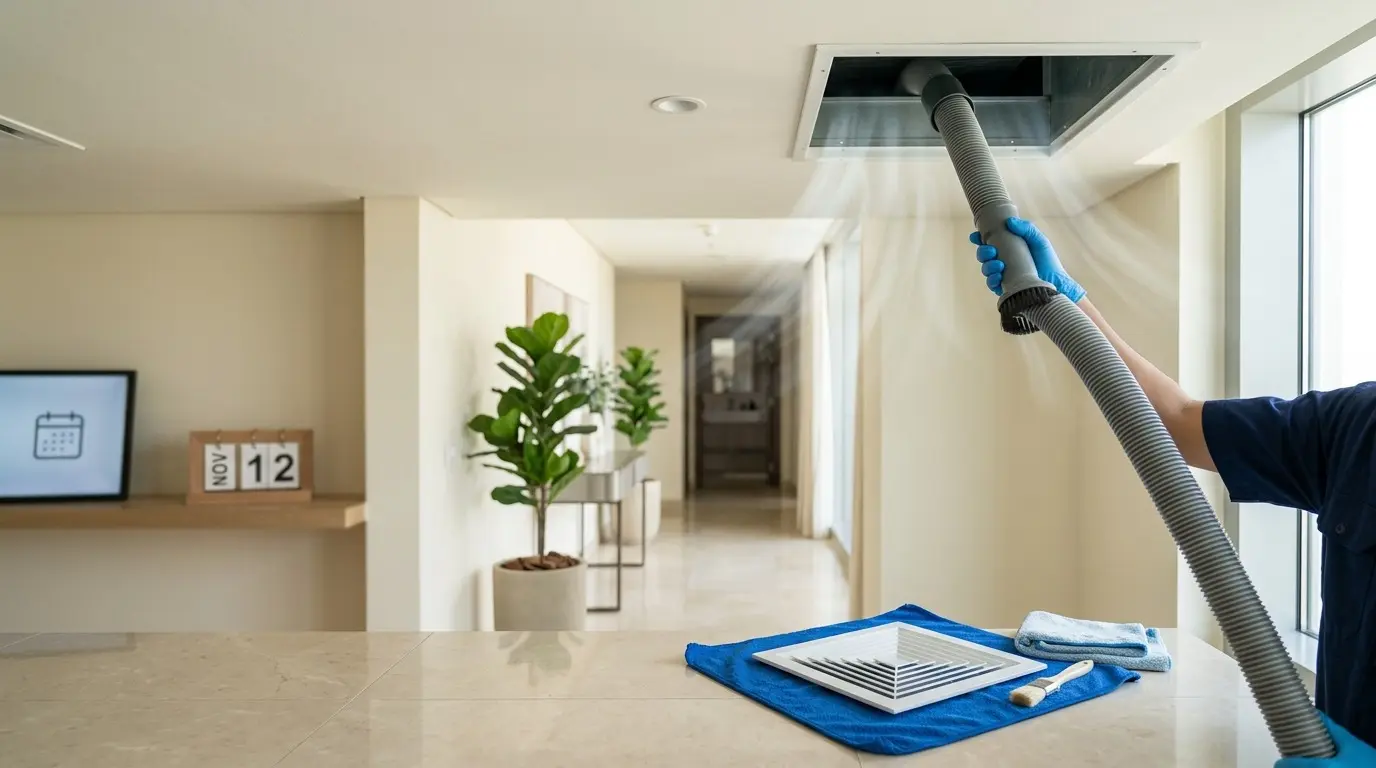
Dust inside AC ducts is easy to ignore because most of the system stays hidden above ceilings, behind walls, or inside service areas. Your vents may look clean from the outside, but the ductwork can still collect dust, pet hair, pollen, lint, mold spores, and renovation debris over time.
The problem becomes worse when dirty ducts start affecting indoor air quality, airflow, cooling comfort, and energy use. If your home smells musty when the AC starts, dust returns quickly after cleaning, or allergy-like symptoms feel stronger indoors, your ducts may need attention sooner than expected.
The solution is knowing the right cleaning schedule for your home. In general, AC ducts should be cleaned every 3 to 5 years, but some homes need cleaning every 2 to 3 years or immediately after major dust exposure. The right answer depends on your lifestyle, location, AC usage, and duct condition.
How Often Should AC Ducts Be Cleaned?
If you ask about how often should ac ducts be cleaned, AC ducts should generally be cleaned every 3 to 5 years for most homes with normal use. This schedule helps maintain better airflow, reduce dust buildup, and support cleaner indoor air. However, homes with pets, smokers, allergies, asthma, high humidity, or recent renovation work may need cleaning more often.
The 3 to 5 year guideline works well for homes where the AC system is properly maintained, filters are changed on time, and there are no clear signs of mold, odor, or heavy dust. In cleaner environments, regular filter replacement and AC servicing can slow down duct contamination.
Some homes need duct cleaning every 2 to 3 years. This is common when there are pets that shed hair, people with respiratory sensitivity, frequent indoor smoking, dusty outdoor surroundings, or moisture problems. In places with heavy AC usage, including the UAE, ducts may collect debris faster because cooling systems run for long hours.
Key cleaning frequency guidelines include:
- Normal homes: every 3 to 5 years
- Homes with pets: every 2 to 3 years
- Allergy or asthma households: every 2 to 3 years
- After renovation: clean immediately
- High-humidity homes: inspect more often
- New homeowners: clean soon after moving in
- Heavy dust areas: inspect every 1 to 2 years
Standard AC Duct Cleaning Schedule for Most Homes
For most residential homes, cleaning AC ducts every 3 to 5 years is a practical schedule. This gives enough time for dust and particles to build up without waiting until the system becomes heavily contaminated. It also supports better air circulation and reduces the chance of stale air smells.
This schedule assumes that you already maintain your AC system properly. Filters should be cleaned or replaced regularly, coils should be checked, and vents should not be blocked by furniture or curtains. If basic maintenance is ignored, ducts may get dirty much faster.
The 3 to 5 year timeline also depends on how often your AC runs. In hot climates, the system may operate daily for most of the year. More runtime means more air passes through the ducts, carrying more particles into the system.
A good approach is to combine scheduled duct cleaning with visual checks. Look for dust around vents, weak airflow, or odor when the AC starts. If the system looks clean and performs well, you may not need cleaning before the 3-year mark.
When Cleaning Every 2 to 3 Years Makes Sense
Some homes need more frequent duct cleaning because indoor air collects contaminants faster. Pets are one of the biggest reasons. Dogs and cats shed hair, dander, and fine particles that can move through return vents and collect inside ducts.
Households with allergy sufferers or asthma patients may also benefit from cleaning every 2 to 3 years. Dirty ducts are not always the main cause of symptoms, but they can hold dust, pollen, dander, and other irritants. When the AC runs, those particles can circulate through the home.
Homes with smokers should also consider more frequent cleaning. Smoke residue can cling to duct surfaces, vents, filters, and coils. Over time, this can create stale odors and affect indoor air freshness even after normal cleaning.
You may need a shorter cleaning cycle if your home has:
- Pets that shed frequently
- Family members with allergies or asthma
- Indoor smoking or strong odors
- Heavy AC usage throughout the year
- Dusty surroundings or nearby construction
- Past moisture or mold problems
Cleaning After Renovation or Moving Into a New Home
Renovation dust is one of the strongest reasons to clean AC ducts sooner. Construction work creates fine dust from gypsum, cement, wood, tile cutting, paint sanding, and drilling. These particles can enter vents and settle deep inside the duct system.
Even if contractors cover some areas, fine dust can still travel through the home. Once the AC runs, that dust can circulate into bedrooms, living areas, and offices. This is why duct cleaning is strongly recommended after major renovation or remodeling work.
New homeowners should also consider duct cleaning shortly after moving in. You may not know whether the previous owner cleaned the ducts, changed filters, or maintained the AC system properly. A fresh cleaning gives you a cleaner starting point and removes old dust, hair, and odor buildup.
This is especially important for rental apartments, villas, and purchased homes with unknown maintenance records. Before you fully settle in, schedule an inspection. If the ducts show visible dust, debris, or odor, cleaning early is better than waiting several years.
For businesses, cheap duct cleaning can become expensive if it misses critical areas. Poor cleaning can leave odors, dust release, mold patches, and airflow problems behind. A professional provider such as www.teluscare.com should clearly explain the scope before work starts, especially for commercial properties.
Signs Your AC Ducts Need Cleaning Sooner
Even with a regular schedule, your ducts may need cleaning earlier if the system shows warning signs. Visible dust, musty odors, weak airflow, allergy-like symptoms, and rising energy bills can all suggest the ducts or AC components need attention.
Visible Dust, Debris, or Mold Around Vents
Visible dust around air registers is one of the easiest signs to notice. If dust keeps collecting around vents soon after cleaning the room, the ducts may be pushing particles into the air. This is especially common when ducts have not been cleaned for years.
You may also see dark marks around vents, loose debris inside grilles, or dust blowing out when the AC starts. These signs do not always mean the entire duct system is severely dirty, but they do mean inspection is needed. The issue may be in ducts, filters, coils, or return air sections.
Mold is more serious. If you see black, green, or dark patches near vents, or smell a musty odor when the AC runs, moisture may be present inside the system. Mold can spread through damp areas around coils, drain pans, insulation, and duct surfaces.
Do not try to solve suspected mold with surface wiping only. A professional should inspect the source of moisture and clean the affected system properly. If the moisture issue remains, mold can return even after cleaning.
Allergy-Like Symptoms That Feel Worse Indoors
If sneezing, coughing, watery eyes, blocked nose, or throat irritation feel worse at home, your AC system may be part of the problem. Dirty ducts can hold dust, pollen, pet dander, and other small particles. When air moves through the system, these irritants may circulate repeatedly.
This does not mean ducts are always the only cause. Bedding, carpets, curtains, furniture, humidity, and indoor cleaning habits also affect air quality. Still, the ducts should be checked when symptoms feel consistent indoors and improve when you leave the house.
For families with asthma or respiratory sensitivity, cleaner air circulation matters more. A dirty AC system can add extra irritation to an already sensitive environment. Cleaning every 2 to 3 years may be more suitable for these homes than waiting 5 years.
A professional residential duct cleaning service UAE company can inspect the vents and duct condition before recommending full cleaning. This helps avoid unnecessary service while still protecting indoor comfort.
Musty Smells, Weak Airflow, and High Bills
Musty or stale odors from vents are a common sign that ducts need inspection. The smell may come from dust buildup, moisture, mold growth, dirty coils, blocked drains, or bacteria inside damp AC components. If the odor appears mainly when the AC starts, the system needs attention.
Reduced airflow is another warning sign. If some rooms feel warmer than others, vents seem weak, or the AC runs longer than usual, dust and debris may be restricting airflow. Blocked filters, dirty coils, duct leaks, or clogged vents can all contribute.
A sudden spike in energy bills can also suggest AC system inefficiency. Dirty ducts alone may not always be the only cause, but they can contribute when airflow is restricted. The AC may work harder to cool the same space, increasing running time.
When odors, airflow problems, and high bills appear together, book a full inspection. Cleaning the ducts, coils, filters, and vents may help restore performance if contamination is part of the issue.
FAQs
How often should AC ducts be cleaned in a normal home?
In a normal home, AC ducts should usually be cleaned every 3 to 5 years. This schedule works when there are no pets, smokers, renovation dust, mold signs, or allergy concerns. Regular filter cleaning and AC servicing can help keep the ducts cleaner for longer.
Should AC ducts be cleaned every year?
Most homes do not need full AC duct cleaning every year unless there is a specific problem. Annual cleaning may be useful after renovation, heavy dust exposure, mold issues, pest contamination, or serious indoor air quality concerns. However, yearly inspection and AC servicing are still helpful.
How do I know if my ducts are dirty?
You may have dirty ducts if you see dust around vents, smell musty air when the AC starts, notice weak airflow, or feel allergy-like symptoms mainly indoors. Dust blowing from vents is another strong sign. Dark marks near grilles may suggest dust buildup or moisture problems.
Is duct cleaning necessary after renovation?
Yes, duct cleaning is strongly recommended after major renovation work. Construction dust is fine and spreads easily through the air. It can enter vents during sanding, drilling, tile cutting, ceiling work, painting preparation, or flooring installation.
Set the Right AC Duct Cleaning Schedule
For most homes, AC ducts should be cleaned every 3 to 5 years, but that timeline changes when pets, allergies, smoking, renovation dust, humidity, mold risk, or heavy AC usage are involved.Homes with higher contamination risk often need cleaning every 2 to 3 years, while new homeowners should inspect soon after moving in. The smartest approach is simple: follow a regular schedule, watch for warning signs, maintain filters, and book professional inspection when airflow, odors, or indoor air quality changes.
Also Read

Add a Comment