
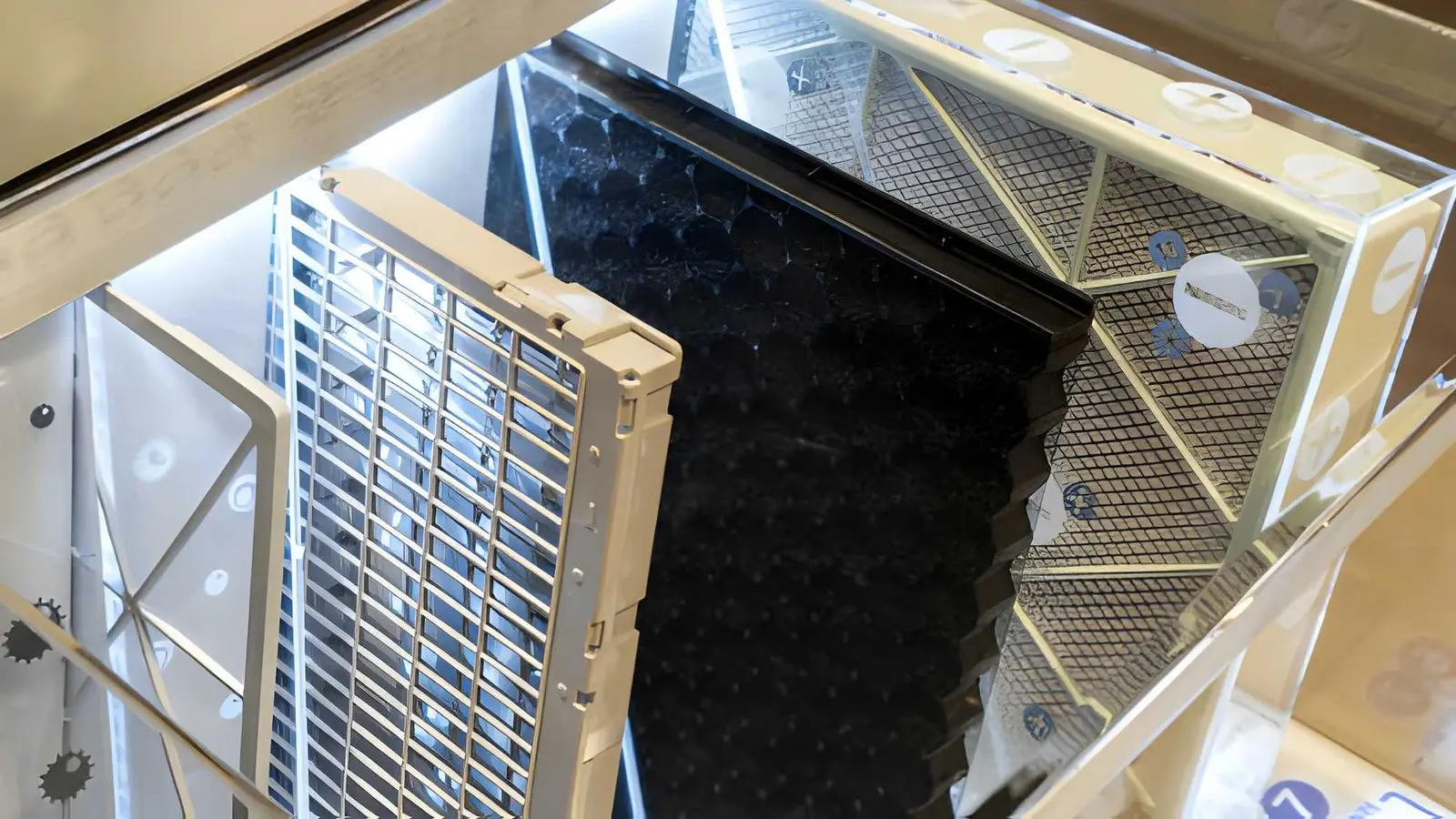
Office buildings, schools, and hospitals all move enormous volumes of air every day, and most of that air recirculates through the same ductwork over and over. If the filtration at the terminal point is weak, dust, mold spores, and fine particulates keep cycling through the building instead of being removed. This is where HEPA filter cassettes come in, sitting at the final stage of the air path to catch what earlier filter stages miss.
Where Cassettes Fit in a Commercial HVAC System
Most commercial systems use a layered approach. A coarse pre filter catches larger debris first, a medium efficiency filter handles mid sized particles, and a HEPA cassette provides the final, high efficiency stage right before air enters the occupied space. Placing the cassette at the terminal point, often inside a ceiling diffuser or a dedicated housing, protects the fine media from premature clogging while still guaranteeing clean air at the point of delivery.
The Efficiency Numbers That Matter
A true HEPA filter, as defined by the U.S. Department of Energy and referenced by the EPA, removes at least 99.97 percent of particles at 0.3 microns, the most difficult particle size to capture. On the ASHRAE MERV scale, this places HEPA filtration at MERV 17 or higher, far above the MERV 8 to 13 range typical of standard commercial HVAC filters. For buildings with vulnerable occupants, such as hospitals or senior care facilities, that gap in performance is not a minor detail. It is often the difference between meeting regulatory air quality requirements and falling short of them.
Applications Where HEPA Cassettes Make the Biggest Difference
Hospitals and Clinical Spaces
Operating rooms, isolation rooms, and pharmacy compounding areas depend on terminal HEPA filtration to control airborne pathogens and particulates. Cassette style units mounted in ceiling grids allow maintenance staff to service filters without shutting down an entire wing.
Electronics and Precision Manufacturing
Dust as small as a few microns can ruin a semiconductor wafer or a precision assembly. HEPA cassettes integrated into fan filter units keep particle counts low enough to meet ISO 14644 cleanroom classifications.
Office Buildings and Schools
Even outside of regulated environments, building owners are installing HEPA grade terminal filtration to cut down on allergens, dust, and airborne illness transmission, particularly in shared HVAC zones with limited outdoor air exchange.
What Facility Managers Should Ask Suppliers
Pressure drop across the cassette affects fan energy use, so ask for the initial and final pressure drop figures rather than just an efficiency percentage. Also confirm the frame and seal design match your housing, since a mismatched gasket profile can leak air around the filter rather than through it, defeating the purpose of the upgrade entirely. HIFINE produces a range of HEPA filter cassettes engineered for consistent airflow performance and tight dimensional tolerance, which matters when a housing was designed around a specific frame size.
Planning a Filtration Upgrade
Retrofitting a commercial HVAC system with HEPA cassettes is rarely a single step. It usually means evaluating existing housings, checking whether the fan system can handle the added pressure drop, and phasing in replacements zone by zone. Working with a manufacturer that understands both the filtration side and the OEM production side tends to make this process much smoother, especially for facility groups managing multiple buildings with different housing types.
Also Read-Best Portable Power Stations for Home Backup Power

Add a Comment