HVAC downtime can disrupt tenants, production schedules, patient comfort, food safety, and operating budgets. The most reliable facilities do not wait for a complete failure. They identify risk early, keep accurate records, and make maintenance decisions based on equipment condition and business impact.
Whether a facility operates rooftop units, boilers, chillers, walk-in coolers, or building automation controls, a structured reliability plan can reduce avoidable interruptions. For practical support with facility system planning and service needs, click here.
Why HVAC Downtime Happens
Most major HVAC failures begin as smaller, manageable problems. A clogged filter restricts airflow, a loose belt strains a fan motor, and a failed sensor can cause equipment to run at the wrong time or temperature. Dirty coils, refrigerant leaks, blocked drains, electrical faults, and worn bearings can create the same pattern: reduced performance followed by a costly shutdown.
Peak summer and winter conditions expose weak components because systems must operate longer and harder. Reactive repairs restore operation after a breakdown. Planned maintenance finds the underlying issue before it becomes an emergency.
Start With an Equipment Inventory
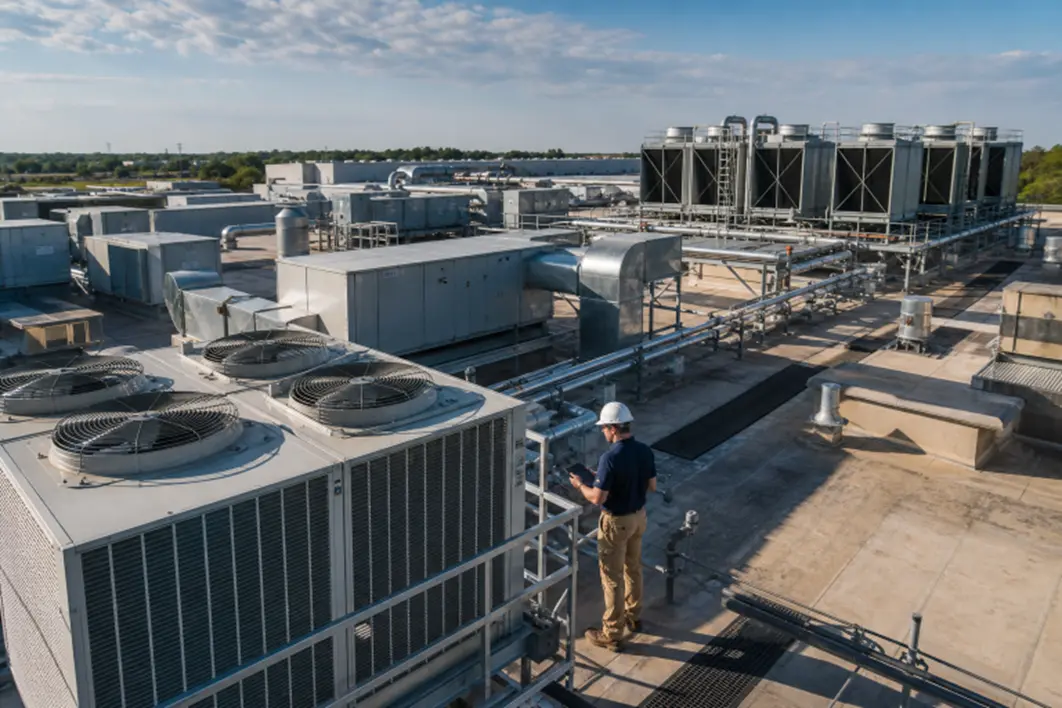
Build one current list of every major asset, including rooftop units, air handlers, chillers, cooling towers, boilers, pumps, exhaust fans, controls, walk-in coolers, and freezers. Record each asset’s location, function, age, model number, condition, refrigerant type, warranty details, service history, and commonly needed replacement parts.
A Simple Asset Record
- Equipment name and exact location
- Make, model, serial number, and installation year
- Condition rating and business criticality
- Recent repairs, recurring alarms, and known deficiencies
An accurate inventory helps teams prioritize equipment that affects critical spaces instead of focusing only on the oldest equipment.
Build a Maintenance Schedule
Maintenance should match equipment type, operating hours, environment, and seasonal demand. Monthly tasks may include visual checks, filter reviews, drain inspections, and alarm follow-up. Quarterly work can include belt inspection, lubrication, coil cleaning, electrical checks, and control verification. Seasonal service should prepare cooling and heating equipment before heavy use, while annual reviews should test safety devices and evaluate overall condition.
Written records should capture dates, findings, photos, completed work, and recommended next steps.
Watch for Early Warning Signs
Staff should report uneven temperatures, unusual noise, frequent cycling, slow temperature recovery, repeated alarms, rising utility use, water near equipment, or ice on coils and refrigerant lines. A trained facility employee can perform basic visual checks, such as looking for damaged insulation, blocked intakes, dirty filters, and water leaks. Electrical repairs, refrigerant work, combustion issues, and safety-control concerns require a qualified technician.
Improve Controls and Scheduling
Controls should reflect actual occupancy, production hours, weather conditions, and seasonal needs. Review whether unoccupied areas are being conditioned, whether fans and pumps run longer than necessary, and whether sensors are placed and calibrated correctly. Poor sequences can cause simultaneous heating and cooling, while broad alarm limits can hide developing problems.
Building automation alarms should lead to review and action, not routine dismissal. An alarm that repeats without investigation is often an early warning that a component, control sequence, or operating practice needs attention.
Protect Refrigeration Systems
Walk-in coolers, freezers, cold-storage rooms, and process refrigeration need special attention because downtime can quickly affect inventory and operations. Check door seals, strip curtains, defrost settings, condenser cleanliness, airflow, product temperatures, and alarm-response procedures. Maintain refrigerant records, investigate leaks promptly, and use safe service practices.
When planning equipment work, facility teams should review the current technology transition requirements that affect refrigeration and air-conditioning equipment choices.
Maintain Boilers and Heating Equipment
Before heating season, inspect boilers, pumps, expansion tanks, flue systems, relief valves, low-water cutoffs, and combustion performance. Steam leaks, uneven heat, short cycling, burner noise, or pressure changes should be addressed quickly. Keep boiler rooms clean, ventilated, and accessible. Fuel-burning equipment should always be inspected and serviced by qualified professionals.
Use Data to Find Performance Problems
Track energy use, equipment runtime, alarm frequency, repair costs, comfort complaints, and temperature trends. Even simple trend logs can reveal declining capacity or excessive cycling before occupants notice a failure. Compare similar units across buildings or zones, and confirm that sensors and meter data are accurate before approving costly repairs or replacements.
Plan Repairs and Replacements
Evaluate repair cost, equipment age, parts availability, efficiency, repeat-failure history, and downtime risk. Rank assets by business importance, not age alone. Before approving a major project, ask what caused the failure, whether the unit is properly sized, whether existing controls and electrical service will support replacement equipment, and what backup plan will protect operations during installation.
Create an Emergency Response Plan
Document who to contact, how to shut down equipment safely, which spaces need priority cooling or heating, and how tenants or staff will be notified. Keep equipment maps, manuals, emergency contacts, service records, and critical spare-part information in one accessible location. Run a brief response drill before extreme weather arrives.
A Practical Reliability Checklist
- Update the equipment inventory and criticality ratings.
- Review the previous 12 months of repairs, alarms, and complaints.
- Schedule seasonal inspections before peak demand.
- Check filters, coils, belts, drains, sensors, and safety controls.
- Review schedules, setpoints, runtime, and alarm limits.
- Confirm refrigeration temperatures and escalation procedures.
- Inspect boilers and heating equipment before cold weather.
- Track energy, runtime, and temperature trends.
- Plan replacements for high-risk assets before failure occurs.
- Update and test the emergency response plan.
Conclusion
Reducing HVAC downtime in 2026 requires consistent attention, not constant emergency work. A reliable inventory, targeted maintenance schedule, useful operating data, and clear response plan allow facility teams to correct small problems early. The goal is not to replace every aging system immediately. It is to identify the highest risks, protect critical operations, and make each repair part of a longer-term reliability strategy.
Also Read-Quiet Home Upgrades That Make Everyday Living More Comfortable

Add a Comment