
Cricket pitch markings are the white lines drawn around the wickets on a cricket pitch. These markings are important because they help players and umpires follow the rules of the game.
The main pitch markings include the bowling crease, popping crease, and return creases. They show where the batter must stay safe, where the bowler must deliver the ball, and how umpires decide no-balls, run-outs, and stumpings.
What Are Cricket Pitch Markings?
Cricket pitch markings are the white lines drawn around the wickets at both ends of the pitch. These lines help players, umpires, and viewers understand the legal playing area during a match. The markings are important because they show where the bowler must bowl from, where the batter must reach to be safe, and where umpires check certain decisions.
Bowling Crease
The bowling crease is the line that runs through the stumps. It helps mark where the wickets are placed and is used as a key reference point for other pitch markings.
Popping Crease
The popping crease is the line in front of the stumps. Batters must reach this line to be safe during a run. It is also used by umpires to judge front-foot no-balls.
Return Creases
The return creases are the lines on both sides of the wicket. They help show the area where the bowler’s feet must stay during delivery. These lines are important for checking legal bowling actions.
Standard Cricket Pitch Dimensions
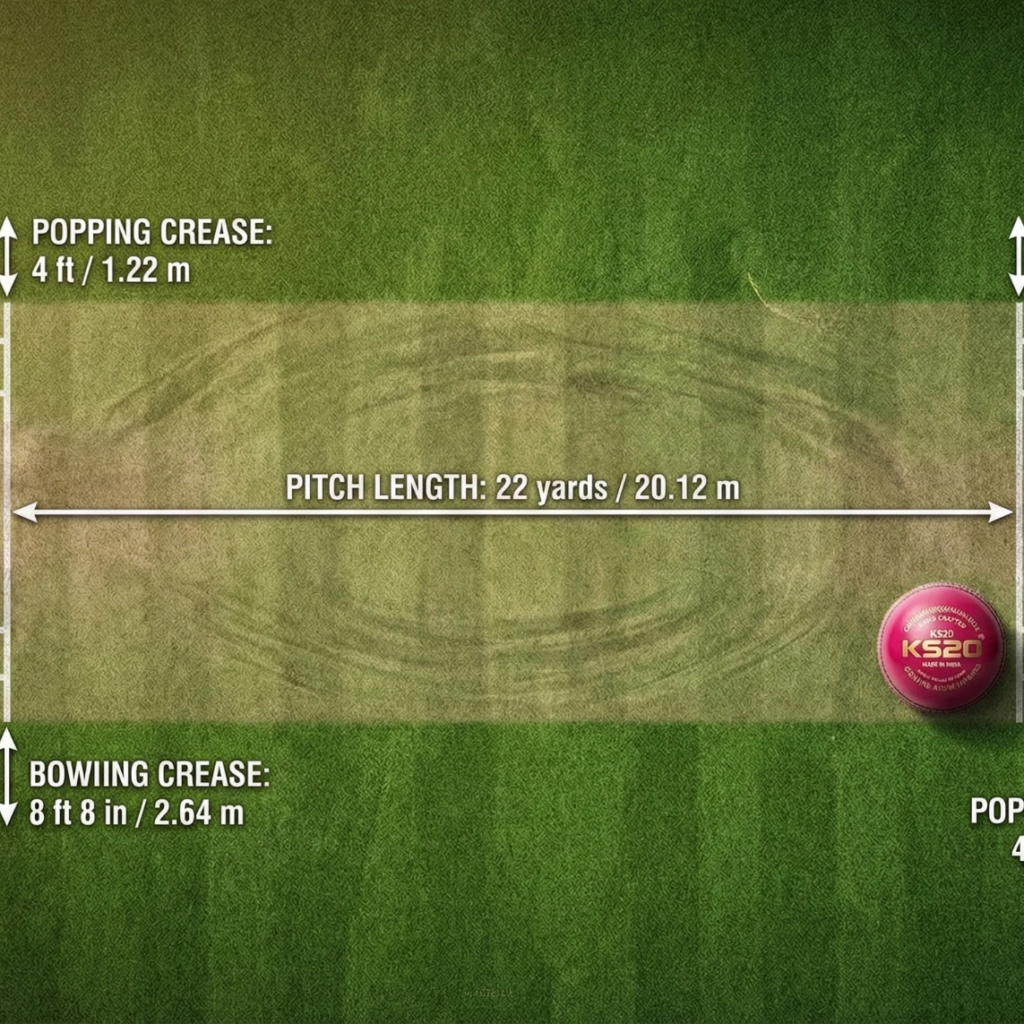
Before understanding cricket pitch markings, it helps to know the basic size of a cricket pitch. A standard cricket pitch is a rectangular area in the middle of the ground. It has wickets at both ends, and the main crease markings are drawn around those wickets. According to the MCC Laws, crease markings are drawn at each end of the pitch. These include the bowling crease, popping crease, and return creases, which define the playing area around the wickets.
Length of a Cricket Pitch
The length of a cricket pitch is commonly known as 22 yards, which is equal to 20.12 metres. This is the distance between the two sets of wickets. This length is important because it controls the distance a bowler delivers the ball and the distance batters run between the wickets.
Width of a Cricket Pitch
A standard cricket pitch is usually 10 feet, or 3.05 metres, wide. The main playing strip is prepared carefully so the surface is suitable for batting and bowling. The crease markings are placed at both ends of this strip, around the wickets. These lines help define where players stand, bowl, run, and complete safe ground.
Why Pitch Dimensions Matter
Pitch dimensions matter because they help keep the game fair and consistent. The same pitch length and markings allow bowlers, batters, and umpires to follow clear rules. For bowlers, the markings help decide legal deliveries and no-balls. For batters, they show the safe area during runs, stumpings, and run-outs. For umpires, accurate dimensions make it easier to judge close decisions fairly.
Main Cricket Pitch Markings Explained
The main cricket pitch markings are the bowling crease, popping crease, and return creases. These lines are marked at both ends of the pitch and help umpires judge no-balls, run-outs, stumpings, and legal deliveries. Under MCC Law 7, the crease positions are marked by white lines at each end of the pitch.
Bowling Crease
The bowling crease runs through the stumps at each end of the pitch. The stumps are placed in the centre of this line, which makes it an important reference point for the rest of the pitch markings. For the bowler, the bowling crease marks the end of the pitch and helps define the legal delivery area. According to the MCC, the bowling crease is 8 ft 8 in, or 2.64 m, long, with the stumps positioned in the centre.
Popping Crease
The popping crease is the line in front of the bowling crease. It is very important for both batters and bowlers because it is used in run-outs, stumpings, and front-foot no-ball decisions. For batters, the popping crease helps show whether they are safely in their ground. If a batter is short of this line when the wicket is broken, they may be run out or stumped. For bowlers, the front foot must land correctly in relation to this crease to avoid a no-ball. The popping crease is marked 4 ft, or 1.22 m, in front of and parallel to the bowling crease.
Return Creases
The return creases are the vertical lines marked on both sides of the wicket. They run at right angles to the popping crease and help define the bowler’s legal delivery area. These lines are mainly used to check the bowler’s foot position during delivery. If the bowler’s back foot lands outside the allowed area, the umpire may call a no-ball. The return creases are marked 4 ft 4 in, or 1.32 m, on either side of the centre line of the stumps. This helps keep the bowler’s delivery position fair and consistent.
Cricket Crease Markings and Their Uses
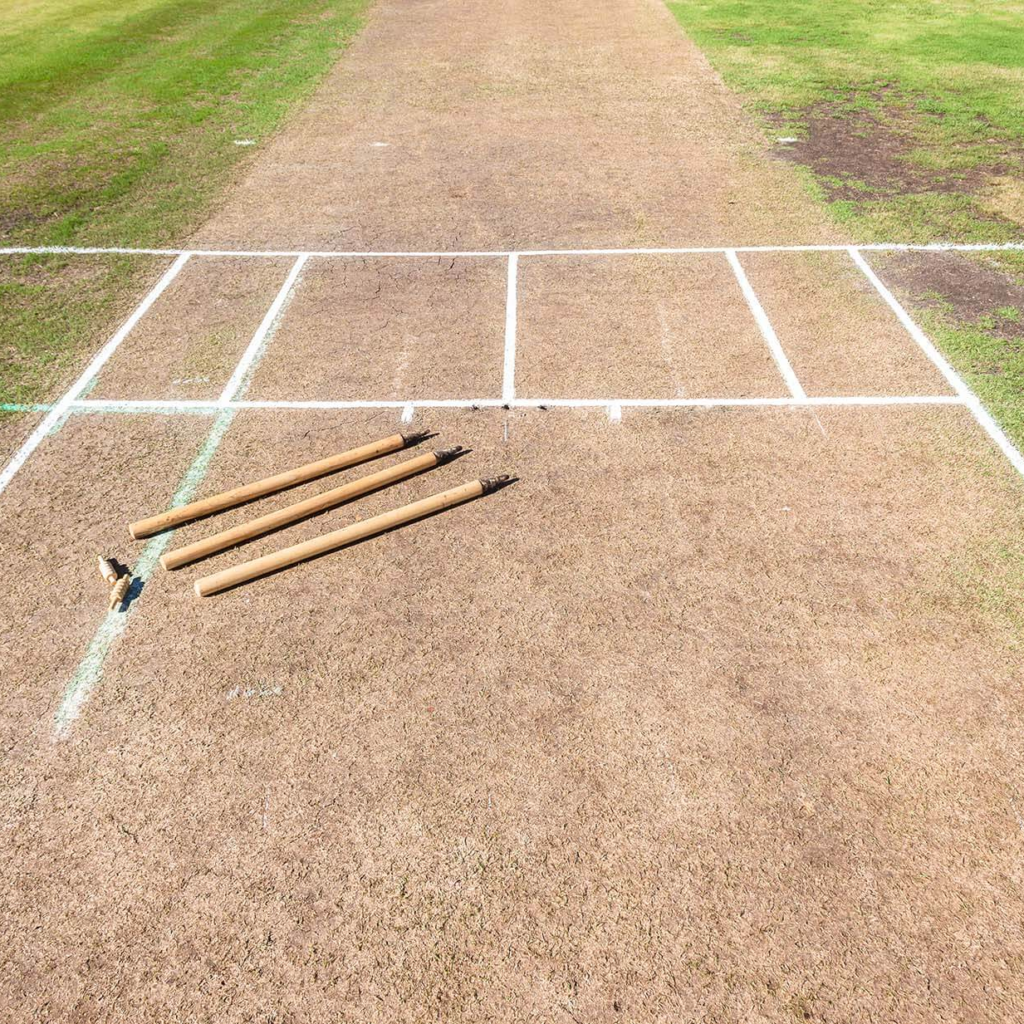
Cricket crease markings are used throughout a match to guide batters, bowlers, and umpires. Each crease has a specific role and helps make decisions clear, fair, and easy to understand.
For Batters
For batters, the popping crease is the most important line. It helps decide whether a batter is safely in their ground during a run-out or stumping. If the batter’s bat or body is behind the popping crease when the wicket is broken, they are usually safe. If they are short of the crease, they may be given out. This makes the popping crease very important when batters run between the wickets or face a wicketkeeper standing close to the stumps.
For Bowlers
For bowlers, crease markings help define where they can legally deliver the ball. The popping crease is used to check front-foot no-balls, while the return creases help umpires check whether the bowler’s back foot stays inside the legal bowling area. These markings are important in every form of cricket, from local matches to major tournaments followed through platforms such as an ipl betting app download. If a bowler crosses the line incorrectly, the umpire can call a no-ball.
For Umpires
Umpires use pitch markings to make fast and fair decisions during the match. The creases help them judge no-balls, run-outs, stumpings, and completed runs. Clear markings make the game easier to control. They give umpires fixed reference points, which helps reduce confusion during close decisions.
Cricket Pitch Marking Measurements
Cricket pitch marking measurements are important because they keep the game fair and consistent. The main measurements include the bowling crease length, the popping crease distance, the return crease position, and the minimum length that each line must be marked.
Bowling Crease Measurement
The bowling crease is the line that runs through the stumps at each end of the pitch. According to MCC Law 7, it is 8 ft 8 in, or 2.64 m, long. The stumps are placed in the centre of this crease, making it the main reference point for the other markings.
Popping Crease Measurement
The popping crease is marked in front of and parallel to the bowling crease. It is 4 ft, or 1.22 m, from the bowling crease. Under MCC Law, the popping crease must be marked at least 6 ft, or 1.83 m, on either side of the centre line of the stumps. It is also considered unlimited in length, which means the line can extend farther if needed.
Return Crease Measurement
The return creases are marked at right angles to the popping crease. They are placed 4 ft 4 in, or 1.32 m, on either side of the centre line of the stumps. Each return crease must be marked from the popping crease to at least 8 ft, or 2.44 m, behind it. Like the popping crease, the return creases are considered unlimited in length under MCC Law.
How Cricket Pitch Markings Affect No-Balls
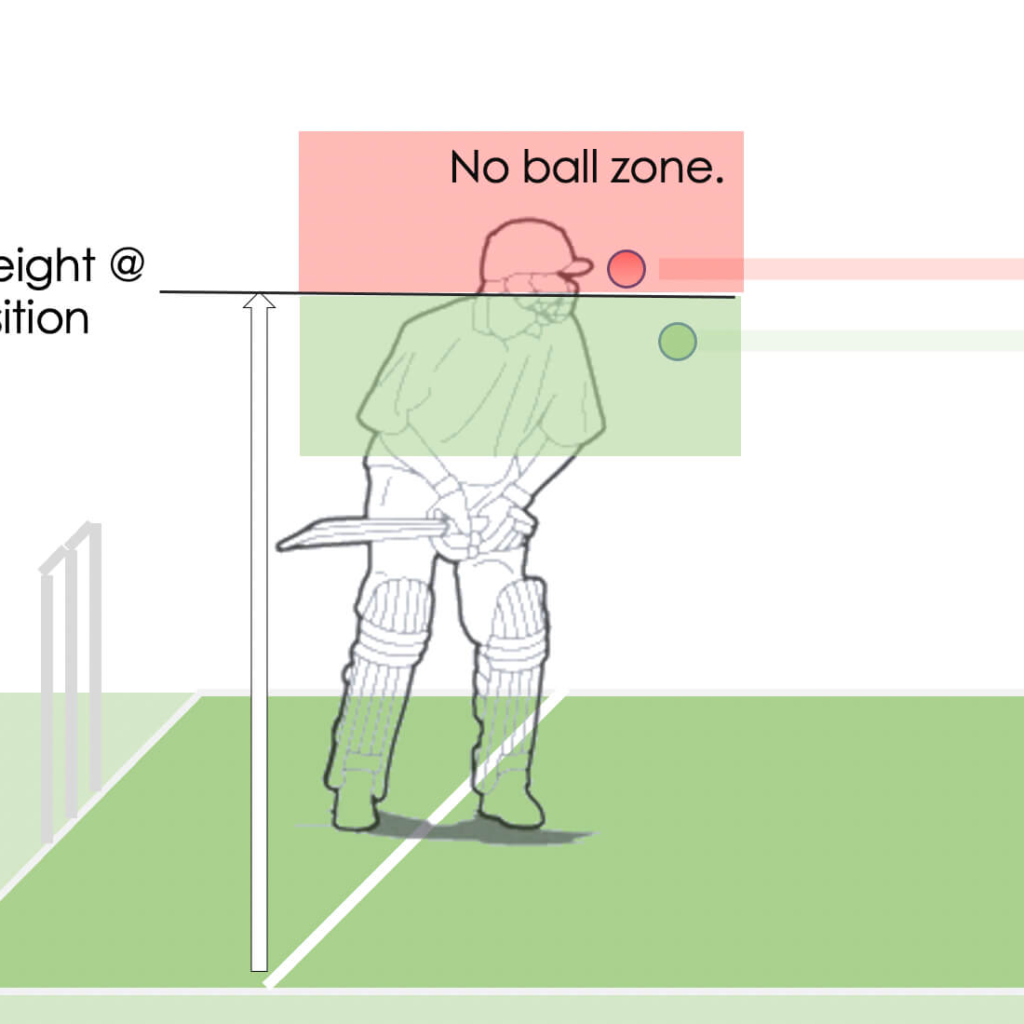
Cricket pitch markings play an important role in no-ball decisions. Umpires use the creases to check whether the bowler has delivered the ball legally. If the bowler’s foot crosses the allowed line or lands outside the legal area, the umpire can call a no-ball.
Front-Foot No-Ball
A front-foot no-ball is judged using the popping crease. When the bowler delivers the ball, part of the front foot must land behind the popping crease. If the bowler’s front foot lands completely beyond the popping crease, it is called a no-ball.This rule helps keep the delivery fair and prevents the bowler from gaining extra distance toward the batter.
Back-Foot and Return Crease No-Ball
The return creases help umpires check the bowler’s back foot position. During delivery, the bowler’s back foot must land inside the return crease area. If the back foot lands outside the return crease, the delivery can be called a no-ball. This rule keeps the bowler within the legal bowling zone and stops them from delivering the ball from an unfair angle.
Why Accurate Markings Matter
Accurate cricket pitch markings are important for fair decisions. If the lines are unclear, uneven, or placed incorrectly, it can make no-ball calls harder for umpires. Wrong markings can affect the flow of the match, create confusion, and lead to unfair advantages. Clear and correct crease markings help batters, bowlers, and umpires follow the game properly.
How Pitch Markings Help Batters
Pitch markings are very important for batters because they show where the batter is safe, how far they can move, and when a run is completed. The most important line for batters is the popping crease, which is used in run-outs, stumpings, and running between the wickets.
Staying Inside the Crease
The popping crease helps decide whether a batter is safely in their ground. If the batter’s bat or body is behind the crease when the wicket is broken, they are usually safe. This matters most during run-outs and stumpings. If a batter steps too far out of the crease and misses the ball, the wicketkeeper may break the stumps and appeal for a stumping. During a run, if the batter does not reach the crease in time, they may be run out.
Using the Crease for Shot Selection
Batters also use the crease to improve their shot selection. They may move forward to reach a fuller ball, move backward to play a shorter ball, or move across the crease to change the angle of the shot. Good batters use small movements around the crease to control line, length, and timing. This can help them defend better, find gaps, or hit attacking shots.
Running Between the Wickets
The popping crease also shows whether a run has been completed safely. To complete a run, the batter must ground the bat or part of the body behind the popping crease at the opposite end. Clear crease markings help batters know where they need to reach. They also help umpires judge close run-out decisions fairly.
How to Mark a Cricket Pitch
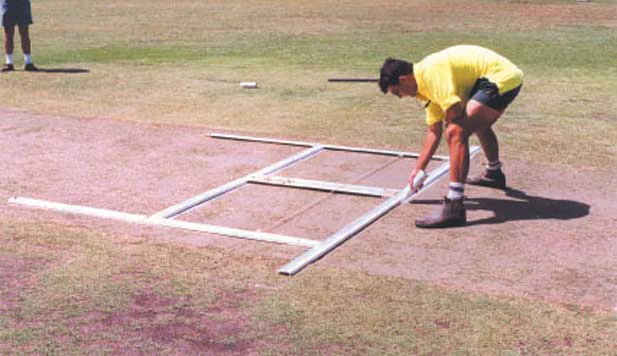
Marking a cricket pitch correctly is important for fair play. Clubs, schools, and ground staff should measure carefully so the bowling crease, popping crease, and return creases are placed in the right positions at both ends of the pitch.
Tools Needed for Pitch Marking
To mark a cricket pitch accurately, you need a few basic tools. These usually include a measuring tape, string line, marking paint or chalk, pegs, and stumps. The measuring tape helps you set the correct distances, while the string line keeps the markings straight. The stumps are also important because they act as the main reference point for the crease markings. Once the stumps are placed correctly, the other lines can be measured around them.
Step-by-Step Marking Process
Start by marking the bowling crease at one end of the pitch. This line should run through the stumps, with the stumps placed in the centre. Next, place the stumps in their correct position and use them as the reference point. From the bowling crease, measure forward to mark the popping crease. This line should be parallel to the bowling crease. After that, mark the return creases on both sides of the wicket. These lines should run at right angles to the popping crease and help define the bowler’s legal delivery area. Once one end is complete, repeat the same process at the other end of the pitch. Finally, check all measurements again to make sure both ends are accurate and clearly marked.
Common Marking Mistakes
One common mistake is drawing uneven or unclear lines. If the markings are not straight or visible, players and umpires may find it harder to make decisions. Another mistake is placing the popping crease at the wrong distance from the bowling crease. Incorrect return crease placement can also affect no-ball decisions. Using faded paint or chalk can cause problems during a match, especially in close run-out or no-ball situations. That is why all markings should be checked before play begins.
Cricket Pitch Markings for Different Formats
Cricket pitch markings stay the same in all main formats of the game. The bowling crease, popping crease, and return creases are used in Test cricket, One-Day cricket, and T20 cricket. However, pitch preparation, match length, and playing conditions can change depending on the format.
Test Cricket
In Test cricket, the pitch is used for several days, so its condition changes over time. The surface may start firm and good for batting, but later it can crack, wear down, and help spinners. Even as the pitch changes, the crease markings remain important. They help umpires judge no-balls, run-outs, stumpings, and legal deliveries throughout the match.
One-Day Cricket
In One-Day cricket, the pitch is prepared for a shorter match than Test cricket. It is often made to support a fair contest between bat and ball, while also allowing good scoring opportunities. The main crease markings stay the same, but fielding restrictions outside the pitch area become more important in limited-overs cricket. Umpires still rely on the pitch lines for no-ball calls, run-out decisions, and batter safety.
T20 Cricket
In T20 cricket, the game moves quickly, so pitch markings are very important for close decisions. No-balls, quick singles, stumpings, and run-outs can all change the result of a match. The crease lines help players and umpires make fast decisions during high-pressure moments. Even though T20 has a shorter format, accurate pitch markings are just as important as in longer matches.
Conclusion
Cricket pitch markings are a key part of every match. The bowling crease, popping crease, and return creases help players understand where to bowl, bat, run, and stay safe. These lines also help umpires make fair decisions on no-balls, run-outs, and stumpings. Whether it is Test cricket, One-Day cricket, or T20, accurate cricket pitch markings keep the game clear, fair, and easy to follow.
Also Read

Add a Comment