
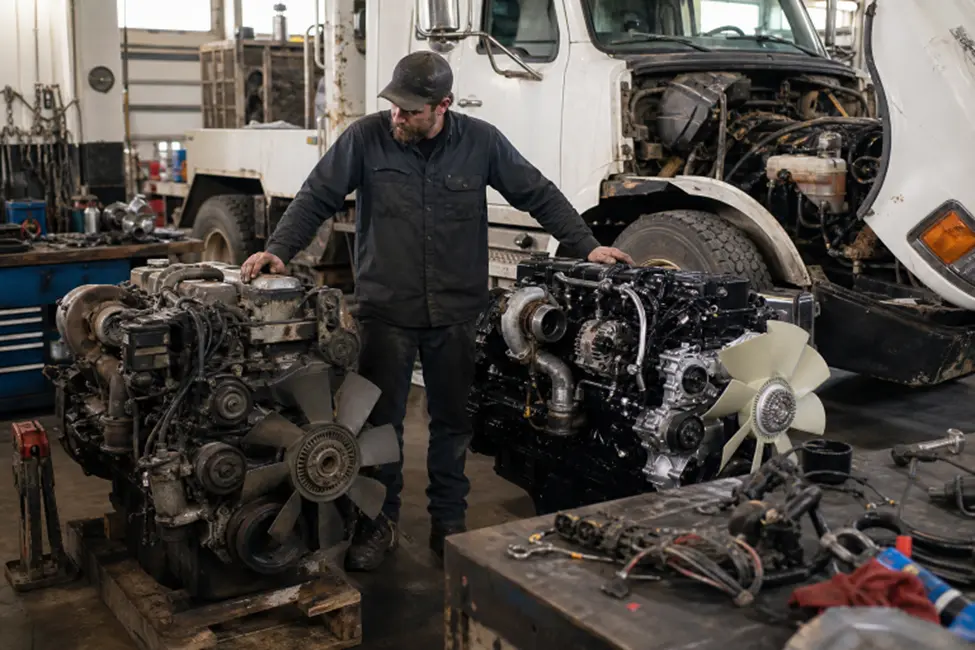
A diesel engine failure can stop a work truck, generator, bus, farm machine, or construction unit at the worst possible time. Choosing a replacement is not simply a matter of matching displacement or finding the lowest advertised price. The right engine must fit the application, work with its existing systems, and provide a realistic path back to dependable service. For owners researching a Cummins 6.7 engine, the same rule applies: verify the exact configuration before committing to a purchase.
A properly matched replacement can often be more practical than repeated major repairs, especially when the truck or equipment still has a sound chassis, transmission, body, hydraulics, or electrical system. However, an engine package that looks inexpensive initially can become costly if it needs extensive parts transfers, programming, emissions-system work, or unexpected installation labor.
Why a Replacement Engine May Make Sense
Replacement is worth considering when repair estimates approach the value of a dependable replacement engine, the existing engine has severe internal damage, or repeated repairs are creating excessive downtime. A work truck with a solid frame, usable transmission, and years of productive service ahead may justify a replacement far more readily than a vehicle with multiple major problems.
Compare the whole project, not just the engine. A repair may preserve original components but can leave other high-mileage internal parts in place. A used engine may cost less upfront but have a limited history. A rebuilt or remanufactured unit can offer a more predictable condition, depending on the supplier’s process and warranty.
Comparing Replacement Engine Types
Engine descriptions are not always standardized, so buyers should ask exactly what has been assembled, inspected, replaced, and tested.
Common Replacement Choices
- Used engine: A previously operated engine, often removed from another vehicle or machine. It can be economical, but service history and remaining life may be uncertain.
- Rebuilt engine: An engine repaired using a mix of inspected, reconditioned, and replacement components. The scope varies significantly by builder.
- Remanufactured engine: A unit restored through a defined production process, commonly with components machined or replaced to established specifications.
- Long block: Usually includes the major internal assembly, such as block, crankshaft, pistons, cylinder head, and valve train, but often requires external parts to be transferred.
- Extended long block: A more complete assembly that may include additional covers, oil pan, or timing components, reducing parts-transfer work.
- Complete engine: A more fully dressed package that may include accessories, fuel-system components, turbocharger, sensors, or wiring, although inclusions still vary.
In general, a used engine may have the lowest purchase price but the highest uncertainty. A long block may reduce acquisition cost but increase labor. A complete engine can shorten installation time, although it may cost more and still require software setup or accessory changes.
Checking Application Compatibility
Two engines with the same model name or displacement can have different ratings, accessory drives, flywheel housings, oil pans, turbo locations, sensor packages, and control strategies. That difference matters whether the engine powers an on-highway truck, industrial pump, agricultural machine, generator, or marine application.
Confirm the make, model, year, duty cycle, and intended use. Then compare engine mounts, bellhousing or flywheel arrangement, cooling connections, intake routing, exhaust placement, fan clearance, and connections for transmissions, hydraulic pumps, or generator heads. For basic background on the operating principles involved, the diesel engine overview is a useful reference, but application-specific service information should always control the final decision.
Using Engine Identification Data
Accurate identification data prevents incorrect quotes, shipping delays, returns, and expensive modifications. Before contacting a supplier, gather the following:
- Engine serial number and identification plate details.
- Engine model, horsepower or kilowatt rating, and calibration information.
- Vehicle identification number or equipment serial number.
- Photos of the front, rear, intake, exhaust, turbocharger, and accessory sides.
- Transmission, pump, generator, and accessory-drive information.
- Control module, wiring harness, and emissions-system identification.
Reviewing Included Parts and Accessories
Never assume that a replacement engine arrives ready to install. Request a written included-parts list that identifies the cylinder head, oil pump, injectors, turbocharger, water pump, manifolds, sensors, wiring, oil pan, front cover, flywheel housing, and engine mounts. Also, identify every component that must be moved from the failed engine.
This review protects the installation budget. A missing turbocharger, injector set, oil pan, or harness can add major cost and delay. It also helps the installer prepare new gaskets, seals, fluids, filters, belts, hoses, clamps, and hardware before the engine arrives.
Accounting for Emissions and Electronic Systems
Modern diesel replacements must be compatible with the original electronic and emissions configuration. Check the engine control module, harness connectors, sensors, exhaust after-treatment equipment, and calibration requirements. Required emissions equipment should not be removed or bypassed, since doing so can create operating, inspection, and compliance problems.
Repair planning may also require access to correct diagnostic information for diesel emissions controls. The EPA’s diesel equipment repair guidance and updates can help owners stay aware of repair information, access, and related compliance considerations.
Calculating the Full Replacement Cost
The practical formula is simple: total replacement cost equals engine price plus shipping, installation labor, supporting parts, fluids, programming, testing, core charges, and related repairs. Include radiator cleaning, fuel-system service, injector or turbo replacement when needed, and downtime or lost operating revenue.
A lower-priced engine is not necessarily the lower-cost choice if it requires more parts transfers or carries a weaker warranty. Compare warranty duration, covered components, labor allowances, exclusions, core return deadlines, freight damage procedures, and the testing documentation provided with the engine.
Preparing for Installation and Testing
Installation should address the cause of the original failure. Flush the cooling system, inspect the radiator and fan, clean contaminated fuel components, check intake and exhaust plumbing, inspect battery cables and grounds, and evaluate the turbocharger. Replace worn belts, hoses, seals, filters, and fluids before startup.
After installation, prime the lubrication and fuel systems according to the applicable service procedure. Check for oil, fuel, coolant, and exhaust leaks. Verify oil pressure, coolant temperature, charging voltage, idle quality, warning lights, diagnostic codes, throttle response, and transmission engagement. Run the engine under light and moderate load before returning it to full duty, then recheck fluids, clamps, belts, and fasteners after the first operating period.
Final Buyer Checklist
- Application, engine model, serial number, and rating are confirmed.
- Mounting, transmission, accessory, cooling, and exhaust compatibility are verified.
- Emissions equipment and electronic controls are matched.
- Included parts, warranty terms, core rules, and freight details are documented.
- Supporting systems have been inspected, and installation testing is planned.
A successful diesel engine replacement depends on documentation, compatibility, supporting-system repairs, and careful startup procedures. Taking time to verify the complete project scope helps restore productive equipment with fewer surprises and a more predictable return to work.
Also Read

Add a Comment