Key Takeaways
- Rely on licensed, NABCEP-certified professionals to ensure safety and code compliance.
- Understanding and following local laws is critical before starting an installation.
- Consistent system maintenance and informed inspections can prevent costly accidents.
Adopting solar energy at home is a strategic move for homeowners looking to cut energy costs and lower their environmental impact. Yet, while the benefits are clear, ensuring a safe installation should always come first. Anyone interested in harnessing solar power should understand the risks associated with improper installation and learn the best methods to keep their family and property safe. For help with compliant installations, explore professional services like https://gtconstruction.solar.
The transition to solar energy requires thorough planning and adherence to industry safety guidelines. In addition to environmental benefits, a well-installed system ensures long-term reliability and reduces hazards for both residents and emergency responders. Whether you are considering a DIY installation or hiring certified specialists, the following information will help guide your approach and keep your project on track.
Hire Certified Professionals
Working with high-voltage systems and complex equipment poses serious safety risks. While some may be tempted by the potential cost savings of a self-installation, mistakes can have costly consequences. Certified installers have the training required by the North American Board of Certified Energy Practitioners (NABCEP). They are up to date on best practices, minimizing the possibility of malfunction or electrical hazards. In the United States, the National Electric Code (NEC) mandates proper grounding and rapid shutdown systems to protect homes and emergency responders. These protections become even more significant in areas prone to extreme weather. For more on residential solar safety standards, the U.S. Department of Energy offers useful guidance.
Understand Legal Requirements
Regulations for solar panel installations vary from municipality to municipality. Many jurisdictions require permits, pre-approval from utility providers, and post-installation inspections to ensure the system is safe and compliant with electrical codes. Failing to get permits or neglecting these legal requirements can result in hefty fines or removal orders. Before purchasing equipment, research your local city or county government’s permitting processes and ensure your intended installation plan complies with all guidelines. This not only protects your investment but also guarantees your system can legally operate.
Prioritize Roof Safety
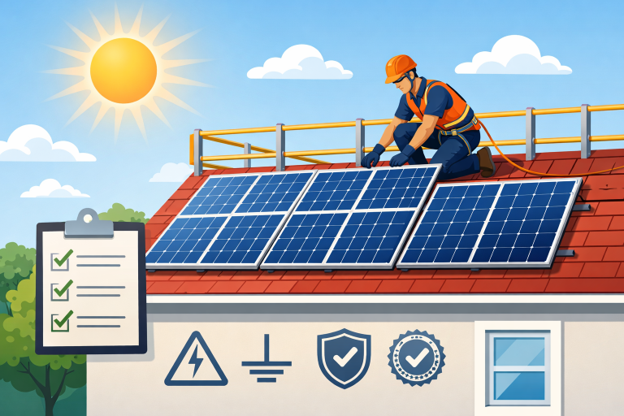
Solar panel arrays add significant weight and require extensive work at height, exposing installers to fall hazards. Before installation, assess the condition of your roof and confirm it is structurally capable of supporting the additional load. OSHA-compliant safety gear, such as fall-arrest harnesses, guardrails, and secure roof anchors, should always be used. If you are not comfortable working on roofs, leave the job to professionals. Rainy, icy, or windy conditions make installation even riskier and should be avoided to reduce the likelihood of slips and falls.
Prevent Electrical Hazards
Once exposed to daylight, solar panels produce electricity, even if they are not yet connected to your home’s main system. This poses a continuous risk of electrical shock. Prioritize the following safety measures during all phases of installation:
- Wear protective, insulated gloves and shoes to prevent shock.
- Do not disconnect wiring under load, as even a brief arc may cause burns or fire.
- Keep cables insulated, shielded, and out of pathways where they might be crushed or cut.
Ensure Proper Ventilation
Panel overheating can damage your system and increase the risk of a rooftop fire. To manage heat buildup, always maintain a gap of at least 10 centimeters between your solar modules and the surface they are mounted on. This gap allows air to move freely beneath the panels for effective cooling. Proper ventilation prolongs the life of your installation and reduces performance losses on hot, sunny days.
Regular Maintenance and Inspections
After installation, routine inspections are essential. Schedule a professional inspection every two to three years, as well as after severe storms or strong winds. Even in mild climates, debris such as leaves, dust, or bird droppings can obstruct sunlight and contribute to panel overheating. Cleaning should be done carefully to avoid scratching the surface or dislodging electrical connections. Regularly check all wires for signs of wear, corrosion, or rodent damage. Both oversized and undersized wires can reduce energy efficiency and present a fire risk if left unaddressed.
Be Aware of Fire Risks
While very rare, solar panels can cause fires if they are improperly installed or maintained. Faulty wiring, loose connections, and failure to follow safety standards are among the most common causes. Always verify that all components meet established safety standards and that your system includes a clearly labeled emergency shutoff. For further homeowner guidance, the U.S. Department of Energy provides a guide to fire safety with solar systems.
Stay Informed About Safety Standards
Key international safety standards protect homeowners, property, and utility workers. These include IEC 61730 and UL 61730 for product safety, and NEC Article 690 for system installation rules. Staying informed about these standards will keep your system insurance-compliant and safe during emergencies. Manufacturers or certified installers can answer questions about compliance and provide proof of certification for installed equipment.
By following these essential safety protocols, you will benefit from efficient solar energy while maintaining peace of mind about your home’s safety and the long-term reliability and performance of your investment. Regular inspections, proper maintenance, and professional guidance help protect your system for years to come, maximizing value and confidence.
Read more: How AI Software Development Is Transforming Modern Business Operations –
How to Choose the Perfect Crossbody Bag for Women: A Complete Buying Guide –
The Impact of Professional Cleaning on Workplace Health and Productivity –

Add a Comment