EMS workout devices are everywhere right now—advertised as a way to “tone muscles while you relax,” “lift your glutes in minutes,” and “strengthen your core without crunches.” It sounds almost like fitness has been simplified into something you can do while scrolling your phone or folding laundry.
But that naturally raises a fair question: do EMS workout devices actually work, or are they just riding on clever marketing?
The short answer is: they do work in a limited, specific way—but not in the way many ads make it seem. To really understand them, it helps to look at what EMS (Electrical Muscle Stimulation) is doing inside the body, and how that compares to real-world exercise.
How EMS devices actually stimulate your muscles
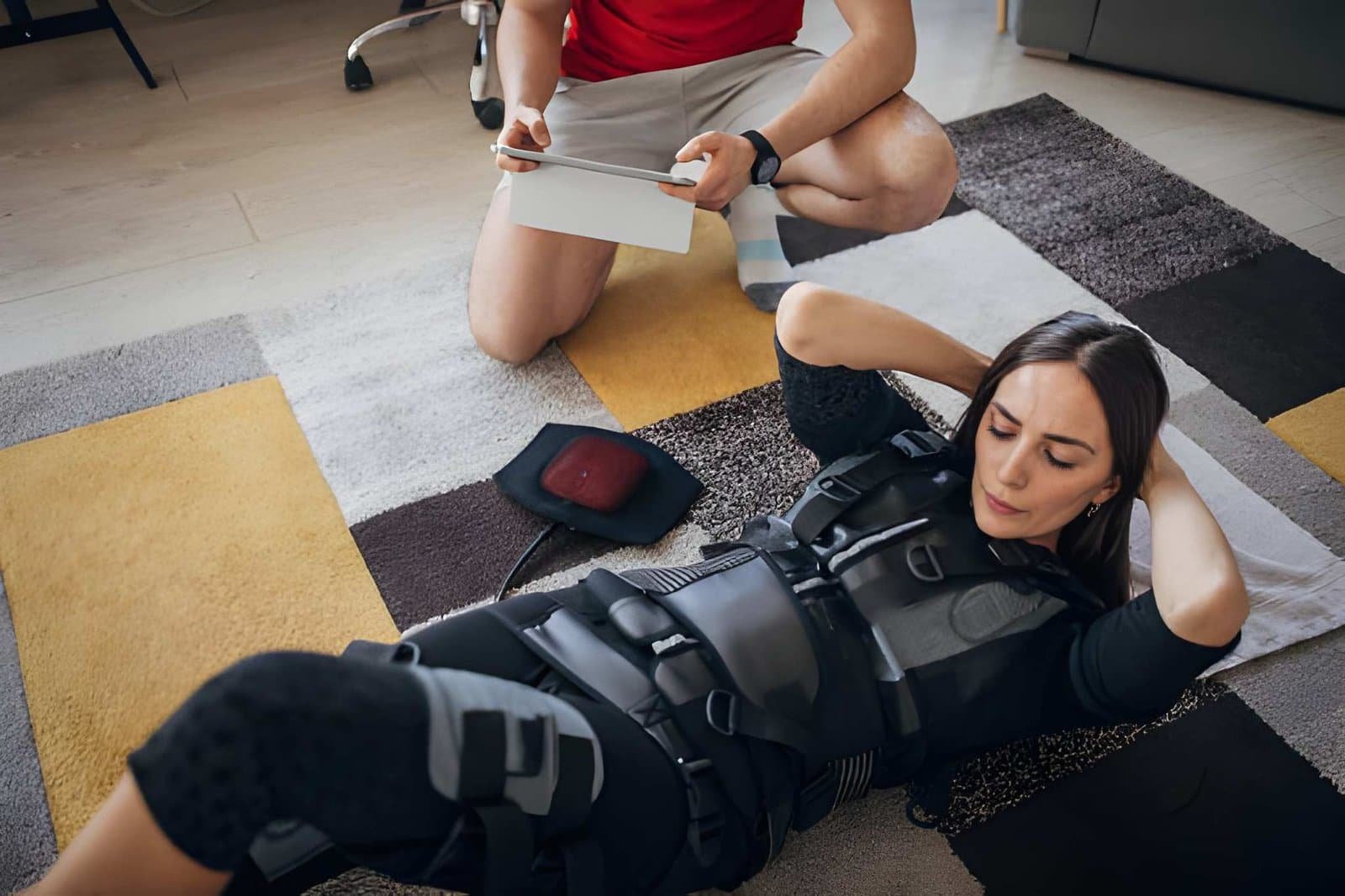
EMS stands for Electrical Muscle Stimulation, which is exactly what it sounds like. The device sends small electrical pulses through pads placed on your skin. These pulses activate the nerves under the surface, which then cause your muscles to contract.
Normally, muscle movement starts in the brain. If you decide to squat, your brain sends a signal through your nervous system telling your leg and glute muscles to work. EMS skips the “decision” part and directly triggers the contraction.
So instead of consciously flexing your abs, you might feel them tightening rhythmically while you’re sitting on the couch. Or your glutes might contract while you’re standing in the kitchen waiting for food to cook.
This is why EMS is often used in physical therapy settings. For example:
- After knee surgery, patients sometimes use EMS to re-engage weakened muscles
- Athletes recovering from injury may use it to prevent muscle loss
- People with limited mobility can use it to maintain some muscle activity
In those cases, EMS is helpful because it keeps muscles “awake” when normal movement is difficult.
But there’s a big difference between medical muscle activation and fitness transformation, which is where most confusion happens.
What science says about results, strength, and fat loss
To understand EMS properly, you need to separate three goals people often mix together: muscle tone, strength gain, and fat loss.
EMS can definitely cause muscle contractions. Over time, repeated contractions can lead to mild improvements in muscle activation and endurance, especially in beginners or inactive individuals.
But when compared to traditional resistance training—like squats, push-ups, or weightlifting—EMS is not as powerful for building real strength.
That’s because effective strength training relies on something called progressive overload, which means gradually increasing resistance so your muscles adapt and grow. EMS doesn’t really replicate that structured challenge.
Think of it like this:
- Traditional workouts are like lifting increasingly heavy boxes every week.
- EMS is like repeatedly tapping the muscle to “remind” it to move—but without the same load or resistance.
Now, about fat loss: EMS does not directly burn fat. Fat loss happens when your body uses more energy than it takes in. That comes from overall activity levels, diet, and metabolic demand—not electrical stimulation alone.
This is where expectations can get misaligned. Some users feel “firmer” after EMS sessions, but that sensation is often temporary muscle tightness or increased awareness of the area, not actual fat reduction.
In real-world industries like sports science and rehabilitation, EMS is viewed more as a support tool than a standalone fitness solution. It can enhance activation, but it doesn’t replace movement-based training.
Where EMS fits in real-life routines (and where it doesn’t)
One reason EMS devices are so popular is convenience. Modern life is busy, and not everyone has time for structured workouts. So the idea of getting “some benefit while doing nothing” is extremely appealing.
In reality, EMS works best in very specific situations:
- A desk worker might use it for light muscle engagement while working from home
- A beginner might use it to build awareness of their core or glutes before starting real exercise
- Someone recovering from injury might use it to maintain muscle stimulation during downtime
For example, a person might wear an EMS belt while replying to emails, feeling their abs gently contracting every few seconds. Or someone cooking dinner might notice their glutes activating while standing still.
But here’s the important distinction: these are supplementary effects. They don’t replace movement, walking, or strength training.
In fitness terms, EMS is more like a “background assistant” than the main workout. It can remind muscles to engage, but it doesn’t challenge the cardiovascular system, improve endurance in a meaningful way, or build significant strength on its own.
That’s why athletes and physiotherapists use it selectively—often alongside actual training programs, not instead of them.
So, do EMS workout devices actually work?
Yes—but only within realistic limits.
EMS devices can:
- stimulate muscle contractions
- support light muscle activation
- assist in recovery or low-activity situations
- help beginners feel more connected to certain muscle groups
But they cannot:
- replace consistent strength training
- directly burn fat or reshape the body on their own
- deliver dramatic “effortless transformation” results
The most accurate way to think about EMS is as a complementary tool, not a shortcut. It’s similar to using resistance bands or posture correctors—helpful, but not sufficient by themselves.
In real life, the people who see the best outcomes are usually those who combine EMS with basic habits like walking, light strength training, and balanced nutrition. For instance, someone might use EMS while also doing daily walks and a few bodyweight exercises. Over time, those combined habits—not EMS alone—create visible change.
If you’re exploring how it fits into your routine or comparing it with traditional workouts, you can click here for a deeper look at how it’s typically used and what to expect in practice.
Final takeaway
EMS technology isn’t fake, and it isn’t magic either. It sits somewhere in between—useful for muscle stimulation and support, but limited when it comes to real fitness transformation.
In the same way that a massage gun doesn’t replace training or a standing desk doesn’t replace exercise, EMS works best as a small addition to a broader routine.
If you treat it as a helper rather than a solution, it can have a place in a modern fitness lifestyle. But if it’s used as a substitute for real movement, the results will usually fall short of expectations.
Also Read

Add a Comment