
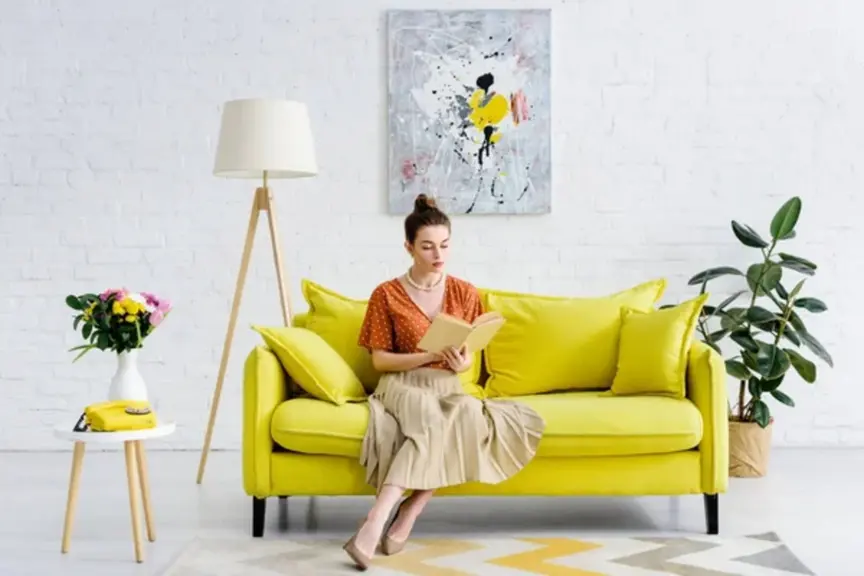
To be honest, I used to have no particular interest in decorative art—I even thought it was pretty useless.
I always felt that bare walls were fine just the way they were; they looked clean, and I even thought they had a certain “sophisticated” vibe.
But after moving into a new home and living there for a while, I realized—no matter how spacious the room or how well the furniture is arranged, if the walls are bare, something feels missing. It’s a subtle feeling. To use a human analogy, it’s like someone wearing elegant, well-tailored clothes but wearing a completely expressionless face.
It was from that moment on that I gradually began to understand why so many people say: Decorative art is actually the “crowning touch” of a home .
What is a visual focal point? Why is it essential to have one in your home?
Simply put, a visual focal point is the first thing you see when you walk through the door.
It could be the accent wall behind the sofa, a wall in the dining room, or even the headboard in the bedroom.
Without a focal point, a space feels chaotic, and the eye has nowhere to rest. But if you have a clear point that catches the eye immediately—a distinct visual center— the entire space gains depth and becomes memorable.
So how do you create this focal point? Decorative art is a great way to achieve it.
Why does decorative art become the visual center?
The logic is actually quite simple.
Humans are naturally drawn to things that stand out—whether it’s a different color, size, or placement. Think about it: imagine a clean, white wall with a stylish painting suddenly hanging in the middle. The moment you walk in, won’t your eyes automatically be drawn to it? That painting naturally becomes the star of the show.
But that’s also where the problem lies—many people buy decorative art, only to find that once it’s hung on the wall, it doesn’t have that “immediately captivating” effect; it might even look a bit cheap. In reality, most of the time, it’s not that the painting itself is bad, but rather that it’s hung incorrectly.
A few common pitfalls many people fall into
The most common issue is that the painting is too small.
A bare, empty wall with just a tiny painting hanging on it simply can’t create the right atmosphere.
Another problem is hanging it too high.
Many people tend to hang paintings near the ceiling, but the correct approach is to position the center of the painting around eye level—this makes it much more visually comfortable.
Another particularly common issue is a lack of stylistic consistency.
For example, if your home has a minimalist style but you choose a painting that’s overly intricate or has very bold colors, it will look out of place.
These details may seem simple, but they really do affect the overall effect.
A few simple yet practical decorating tips
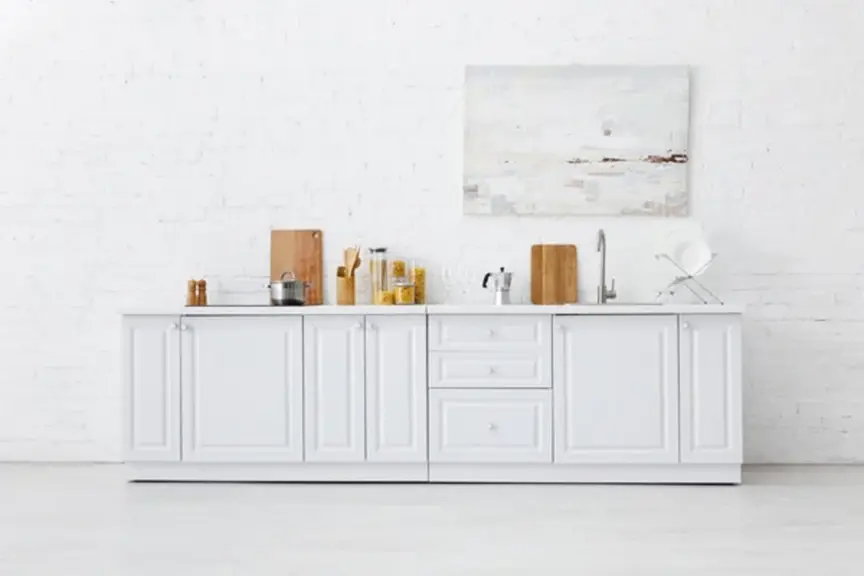
If you’re unsure about how to arrange decorative art, just remember one principle: let the artwork “blend in,” but make it stand out just a little bit.
For instance, when it comes to color, choose a palette that complements larger pieces like your sofa and curtains, then subtly introduce a touch of contrasting color. This ensures the overall look remains cohesive while adding a small highlight.
As for size, here’s a common example: if you’re decorating the wall behind your sofa, aim for a painting width that’s about two-thirds of the sofa’s length. This creates a comfortable visual balance—neither cramped nor sparse.
Another approach I particularly love is to skip a single large piece and instead group several smaller ones together—two or three works just fine. As long as you keep the spacing between the pieces even, the entire wall will look incredibly stylish and visually engaging.
Or, you could pair the artwork with some personal touches, like character merchandise or photos from your travels—it adds a unique charm to the space.
Different spaces call for different approaches
The living room is better suited as the “main focal point,” so you can be a bit bolder—try a larger painting, or even choose abstract pieces, which will create a more striking visual impact when hung on the wall.
The bedroom is a different story. As a place for relaxation and rest, I personally prefer softer, more soothing pieces, such as landscapes or illustrations with simple lines, which help calm the mind just by looking at them.
As for the dining room… it can actually be a bit more lively. For instance, bright, colorful paintings can really stimulate your appetite.
Color really matters
Once, I swapped out a decorative painting for one with warmer tones. After hanging it in the living room, the entire atmosphere changed. When the lights come on at night, it creates a particularly cozy ambiance.
Conversely, cooler tones create a calmer atmosphere, perfect for spaces where you want a “refreshing” feel.
That’s exactly why, when selecting art later on, I started paying more attention to the overall color scheme rather than just whether the design looked nice.
Choosing the right piece isn’t actually that hard
There are so many decorative art pieces on the market that it’s overwhelming. I eventually settled on three criteria: consistent style, soothing colors, and decent quality.
With something like Huemaster‘s hand‑painted oil paintings, those thick layers of paint reflect light in subtle ways as the light changes throughout the day. It gives your wall a new look every single day, and instantly becomes the most eye‑catching art piece in your home. The more you look at it, the more you love it.
Of course, this is just my personal experience. Everyone’s taste is different, so it’s worth comparing a few options.
Some genuine personal insights
Let me share a change in my own perspective—it’s actually quite interesting.
I used to genuinely think that decorative art was just a “nice-to-have” item.
But now, I actually switch out my art based on the season or my mood.
Believe it or not, it’s a bit like changing clothes.
In spring, I might choose something fresher, and in fall, I’ll opt for warmer tones.
Sometimes when friends come over, the first thing they notice is the artwork on the wall, and then we end up chatting about the whole room’s decor—it’s actually quite fun.
To sum it up
The reason decorative art becomes a visual focal point isn’t because it’s overly complex, but because it perfectly fills that little gap on the wall. If you get the basics right—size, placement, and color—you’ve already achieved most of the effect. The rest is just a matter of finding what appeals to you.
Also READ-Business Residence Permit in Poland (2026): Income vs Potential

Add a Comment