

How long is 100 feet? 100 feet is equal to 1,200 inches, about 33.3 yards, or roughly 30.48 meters. To picture how long is 100 feet, imagine about eight average cars parked in a row, the length of a basketball court, or roughly one-third of a football field. It’s a distance commonly used in sports, property measurements, and construction projects.
Numbers alone can feel abstract, but real-world examples make measurements easier to understand. Once you connect 100 feet with everyday spaces like streets, sports fields, or buildings, it becomes much easier to visualize how big is 100 feet in your mind.
100 Feet To Other Measurement Units
| Measurement | Equivalent |
| Inches | 1,200 inches |
| Yards | 33.33 yards |
| Meters | 30.48 meters |
| Centimeters | 3,048 cm |
| Millimeters | 30,480 mm |
These conversions are useful when measurements appear in different units, especially in construction, engineering, and global measurements.
What Does 100 Feet Look Like?
To understand how much is 100 feet, think about spaces where people move around or play sports. For example, a basketball court is about 94 feet long, which means 100 feet is just slightly longer than the entire court.
Another way to picture it is through everyday environments. If you stand at one end of a city street block and look about halfway down, you might be looking at roughly 100 feet of distance. It’s long enough to notice but still short enough to walk across in less than half a minute.
For many homes, 100 feet is close to the depth of a large property lot. Backyard pools, gardens, and patios often fit comfortably within that space.
Real-Life Objects That Are About 100 Feet Long
Here are 13 real-world examples that help you visualize how long is 100 feet. Each comparison shows where this measurement appears in everyday life.
1. A Basketball Court
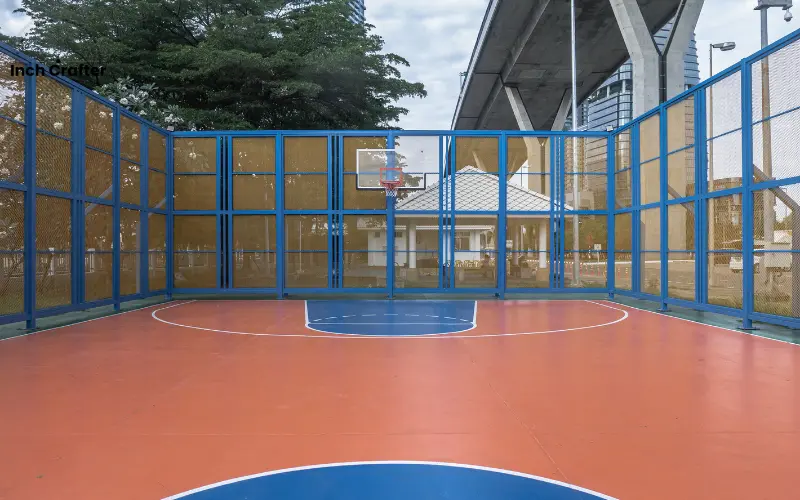
A professional basketball court measures 94 feet long, which makes it one of the easiest ways to picture 100 feet. The extra six feet beyond the court length gives you a very close visual estimate.
Most people have seen or stood on a basketball court at school, gyms, or parks. If you walk from one baseline to the other, you’ve almost traveled 100 feet. This makes it one of the most practical references for understanding the distance.
2. Eight Average Cars Parked in a Row
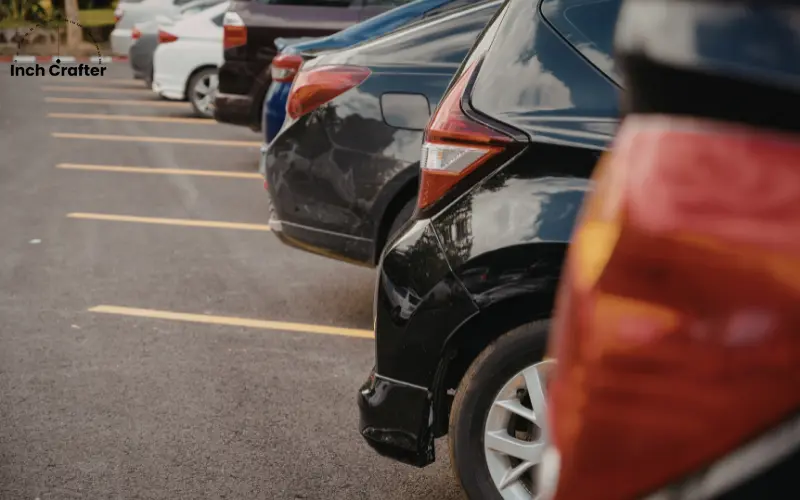
The average car measures 12–15 feet long. When you line up about seven to eight cars, their total length becomes close to 100 feet.
This comparison works well because parking lots and street parking rows are common sights. Visualizing a full row of cars gives a clear mental picture of how far 100 feet stretches.
3. One-Third of an American Football Field

An American football field is 300 feet long from goal line to goal line. That means 100 feet equals roughly one-third of the field.
If you imagine standing at one end zone and walking toward the center, the distance to the first major third of the field would be about 100 feet. Sports fans often find this comparison very easy to picture.
4. A Large Blue Whale

Blue whales can reach 80–100 feet in length, making them one of the largest animals ever to exist on Earth.
Imagining the full length of a blue whale helps put the scale of 100 feet into perspective. When people see whale skeletons in museums, the massive length stretching across the display hall is often close to this measurement.
5. A Standard City Swimming Pool Length

Many community pools measure 25 meters (82 feet) per lane, but larger training pools and extended deck spaces can approach 100 feet in overall length.
If you’ve ever walked alongside a long pool deck or swum several strokes across the water, you already have a sense of what that distance feels like.
6. A Medium Commercial Building Front

Small shopping plazas or commercial buildings often measure around 80–120 feet wide across the front.
If you stand at one corner of such a building and walk toward the opposite corner, you might cover around 100 feet. Architects often use this width when designing storefront layouts.
7. A Suspension Bridge Cable Span

Some pedestrian bridges or smaller suspension bridges include cable spans around 100 feet long.
Walking across one of these bridges gives a strong sense of distance because the span stretches across water or a valley. That visual openness makes the length easier to recognize.
8. A Row of Mature Trees in a Park

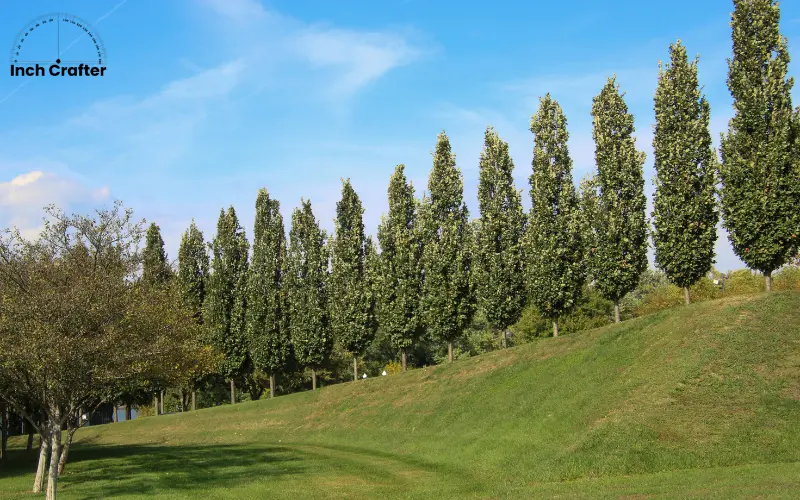
Park planners often space trees 10–15 feet apart. When you line up around seven or eight trees, the total distance becomes about 100 feet.
If you’ve walked through landscaped parks or garden paths, that spacing creates a natural reference for this length.
9. A Large Warehouse Loading Area
Warehouse loading docks frequently have open areas measuring 90–120 feet across to allow trucks to maneuver.
Standing on one side of the dock and looking across the space can easily give you a sense of what 100 feet feels like in a practical environment.
10. A Tall 9-Story Building Height

Many residential buildings average 10–12 feet per floor. Multiply that by about nine floors, and the height approaches 100 feet.
Looking up at a building of this size provides a vertical reference for the same distance measured horizontally.
11. A Long Superyacht

Large luxury yachts often measure 90–120 feet in length.
If you see one docked at a marina, the distance from the bow to the stern is close to 100 feet, giving a striking visual comparison.
12. A Highway Billboard Support Span

Large highway billboards sometimes use support frames around 80–100 feet wide to maximize visibility for drivers.
When driving past one of these signs, the width stretching over the roadside gives a clear sense of scale.
13. A School Running Track Straightaway

The straight sections of many school running tracks measure close to 100 feet before curving into the bend.
If you’ve ever run track or watched a race, the straight sprint section feels almost exactly like the distance we’re describing.
How to Estimate 100 Feet Without Measuring Tools
You don’t always need measuring equipment to estimate how long is 100 feet.
Use walking steps:
An average adult step covers about 2.5 feet, so roughly 40 steps equal about 100 feet.
Use car lengths:
Since most cars are about 14 feet long, lining up seven cars creates a distance close to 100 feet.
Use sports fields:
A basketball court or a third of a football field provides a reliable visual estimate.
Use building floors:
Nine or ten building floors stacked vertically can represent roughly 100 feet of height.
Is 100 Feet Considered Big?
The perception of 100 feet changes depending on the situation.
Compared to Luggage
Suitcases are usually 2–3 feet tall, so 100 feet is extremely large compared with personal travel items.
Compared to Furniture
Most sofas measure 6–8 feet long, meaning you could place more than twelve sofas end-to-end in a 100-foot space.
Compared to Screens
Even large home theater screens rarely exceed 20 feet wide, which is far smaller than 100 feet.
Compared to Buildings
A 100-foot height equals about 8–10 building floors, which makes it quite tall in many cities.
Compared to Everyday Spaces
Outdoors, 100 feet feels moderate — similar to property lengths, sports areas, or open parking lots.
Practical Situations Where 100 Feet Matters
Understanding this measurement becomes useful in several real situations:
- Planning backyard layouts or property boundaries
- Estimating distance for outdoor events
- Designing parking lots or building fronts
- Measuring sports practice areas
- Planning drone flight distances
These everyday uses show why people often ask how big is 100 feet when visualizing space.
We have more guides on measurements for you to make this thing is easy for you. Check here:
- 9 Common Things That Are Exactly 50 Feet Long
- 10 Common Things That Are Exactly 20kg Heavy
- 10 Common Things That Are Exactly 20 cm Big
- 10 Common Things That Are Exactly 30 cm Big
FAQs
How long is 100 feet in meters?
100 feet equals 30.48 meters.
How many yards is 100 feet?
It equals 33.33 yards.
How far can you walk 100 feet?
Most people can walk 100 feet in about 15–20 seconds at a relaxed pace.
Is 100 feet longer than a basketball court?
Yes. A basketball court is 94 feet long, so 100 feet is slightly longer.
How many steps equal 100 feet?
About 40 average walking steps equal roughly 100 feet.
What everyday places measure about 100 feet?
Examples include basketball courts, parking rows, warehouse spaces, and building fronts.
Conclusion
Understanding how long is 100 feet becomes much easier when you connect the number with familiar spaces and objects. Instead of imagining a simple measurement, you can picture a basketball court, a row of cars, or a tall building reaching nearly ten stories high.
These real-world comparisons show that 100 feet is a significant distance in many environments. It’s large enough to matter in construction, property planning, and sports layouts, yet still short enough to walk across quickly.
Once you start recognizing these visual references, estimating how much is 100 feet becomes natural. Whether you’re planning outdoor spaces or simply curious about scale, this measurement becomes easy to visualize in everyday life.

Add a Comment